 ultimate-guide
Bathroom Renovation Planning: Complete Guide
Table of Contents
- Why Bathroom Renovation Planning Starts With a Clear Brief
- Your Bathroom Renovation Checklist: What to Decide Before Work Starts
- Understanding Bathroom Renovation Cost Before You Commit
- The Correct Bathroom Renovation Order of Work
- Building a Realistic Bathroom Renovation Timeline
- Common Bathroom Renovation Mistakes and How to Avoid Them
- Choosing the Right Installer for Your Bathroom Renovation
- Conclusion
- Frequently Asked Questions
Last Updated: October 18, 2026
Why Bathroom Renovation Planning Starts With a Clear Brief
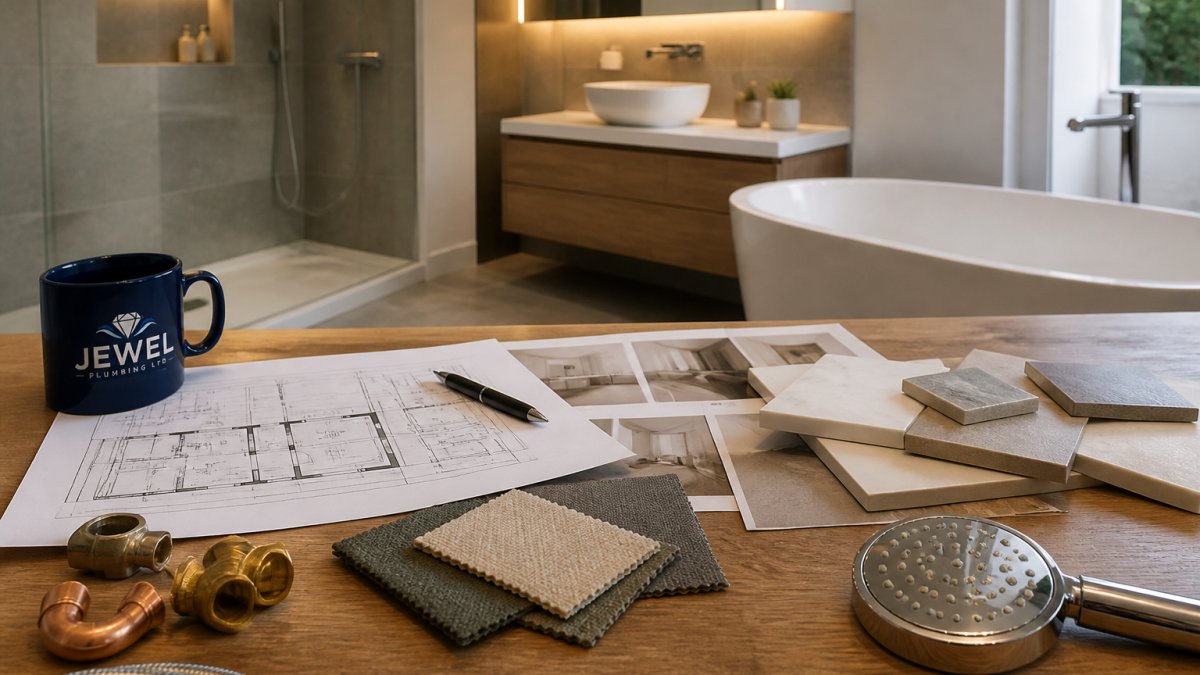
Most bathroom projects that go wrong were never properly defined in the first place. A clear brief is the single document that keeps a renovation on track, and it costs nothing but an evening of honest thinking. This complete guide to bathroom renovation planning from Jewel Plumbing walks you through every decision, in the right order, before a single tile comes off the wall.
Write down three things: who uses the room and how, what you cannot live without, and what you would like if the budget allows. That last distinction matters more than most homeowners expect. A brief that lists "walk-in shower, heated towel rail, storage" behaves very differently from one that lists "spa-like retreat", one can be priced, the other cannot.
Be specific about the fixtures you touch daily. Do you want a bath at all, or would a larger shower serve you better? Where does the towel actually end up? Which side do you step out of the shower? Small habits shape big layout decisions, and changing them after first fix is where budgets bleed.
Your Bathroom Renovation Checklist: What to Decide Before Work Starts
A bathroom renovation checklist is the list of decisions that must be locked before demolition, not a shopping list. Get these settled and the build runs smoothly; leave them open and every trade waits on you.
- Confirm the layout: bath, shower, basin and WC positions
- Decide whether the layout stays within existing drainage or moves
- Choose the shower type and confirm water pressure supports it
- Select tiles, flooring and finishes, with spares ordered
- Confirm extractor fan position and ducting route
- Agree storage: vanity units, niches, cupboards
- Decide on underfloor heating, if wanted
- Confirm who supplies materials and who holds the warranty on each
- Agree access arrangements, working hours and waste removal
- Sign off the written quote and payment schedule
The order matters. Layout decisions drive plumbing, plumbing drives tiling, and tiling drives everything visible. Change your mind on the shower position after waterproofing and you pay twice for the same wall.
Understanding Bathroom Renovation Cost Before You Commit
Bathroom renovation cost is driven by four things: how much the layout moves, the quality of finishes, the condition of what is found behind the walls, and labour. There is no honest way to quote a figure without seeing the room, so treat any number given over the phone with suspicion.
Where the Money Actually Goes
Labour and trades typically take the largest share, followed by tiling and sanitaryware, then waterproofing and preparation, with fixtures and finishes absorbing the remainder. Preparation is the line item homeowners most want to cut and the one that causes the most expensive failures. A cheap tanking job behind a beautiful tile is still a leak waiting to happen.
Building a Contingency That Holds
Set aside a contingency and treat it as untouchable until the project is finished. Older properties routinely hide surprises: failed pipework, rotten joists, or a soil stack that does not run where the drawings suggest. A contingency that gets spent on upgraded taps is not a contingency.
The Correct Bathroom Renovation Order of Work
Bathroom renovation order of work follows a fixed sequence, and skipping a step creates rework. Strip out first, then inspect and make good, then first-fix plumbing and electrics, then waterproofing, then tiling, then sanitaryware, then finishing and testing.
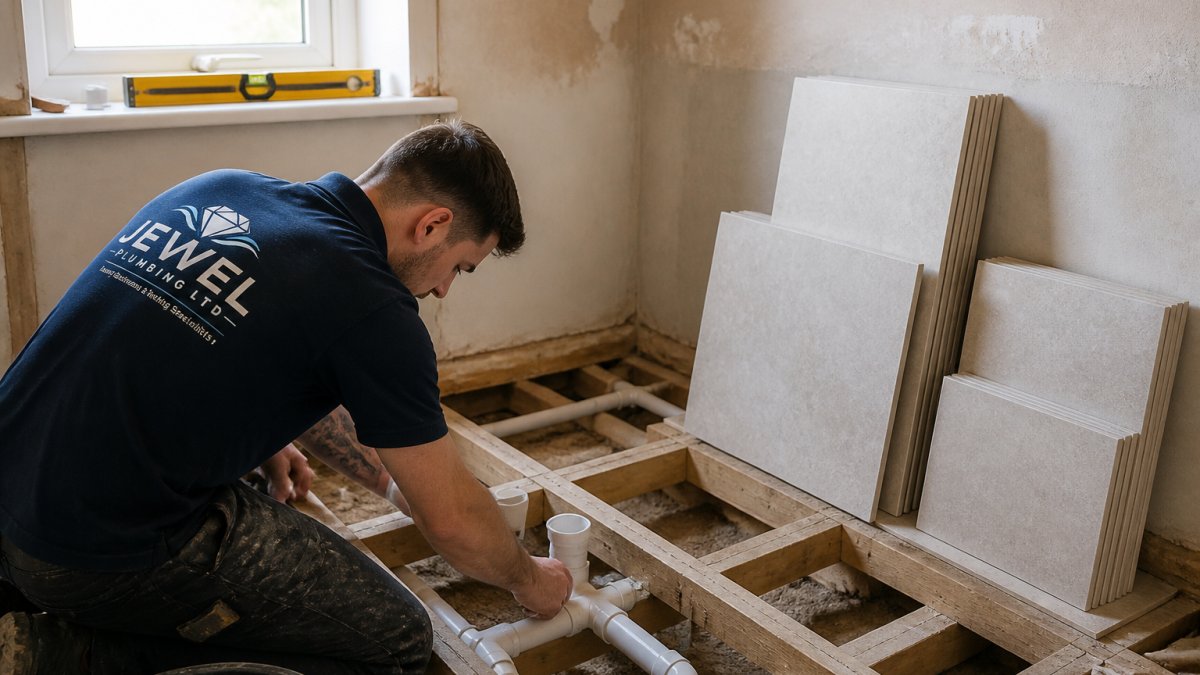
Two rules govern the sequence. Nothing gets tiled until waterproofing has been checked, and nothing gets sealed until the water runs and drains correctly. Fitters who tile first and test later are creating a problem you will inherit.
The sequence also dictates when decisions must be made. Tile choice is needed before waterproofing is finished; sanitaryware must be on site before second fix. Late deliveries stall the whole chain.
Building a Realistic Bathroom Renovation Timeline
A bathroom renovation timeline is the schedule of phases from strip-out to handover, and it is only realistic if it accounts for drying and curing time. Waterproofing membranes and tile adhesive need time to set before the next trade can work over them.
Build the schedule backwards from your completion date and add buffer at each phase transition, not just at the end. A week of slack at the end does nothing when the tiler is waiting on a delayed delivery in week two. Order long-lead items, such as bespoke vanity units or specialist tiles, before demolition begins.
Expect disruption. A single-bathroom home loses its only shower for the duration, so plan washing arrangements and confirm how the installer will protect the rest of the house from dust. If you are working, agree daily access times in advance rather than negotiating them mid-project.
Common Bathroom Renovation Mistakes and How to Avoid Them
The mistakes that hurt most are rarely about taste. They are about sequencing, specification and communication, and each one is avoidable with a little discipline at the planning stage.
| Mistake | Fix | Impact |
|---|---|---|
| Choosing finishes before layout | Lock layout first, then select | Avoids expensive re-selection |
| Skipping full waterproofing | Tank the wet areas properly | Prevents hidden leaks and rot |
| No written variation process | Agree changes in writing, with cost | Stops budget creep |
| Buying materials without checking | Confirm sizes and stock with installer | Avoids stalled work |
| Ignoring ventilation | Specify a correctly sized extractor | Reduces damp and mould |
| No contingency fund | Ring-fence a reserve | Absorbs hidden surprises |
Choosing the Right Installer for Your Bathroom Renovation
Choosing an installer comes down to evidence: a written, itemised quote, a clear scope of what is and is not included, and references you can actually contact. Ask how variations are priced, who is responsible for each warranty, and what happens if a defect appears after handover.
A premium bathroom installation should feel calm and controlled. At Jewel Plumbing, we quote in writing with no hidden extras, and we are happy to walk you through the sequence and specification before you commit. Ask to see recent work and speak to past customers; a confident installer will welcome it.
Check that the trades involved are competent for the work, that electrical work is done by a suitably qualified person, and that any gas or heating alterations are handled by a registered engineer. Confirm who is responsible for building regulations notification where it applies, and get it in writing.
Conclusion
A bathroom renovation rewards planning and punishes improvisation. The brief, checklist, sequence and contingency are not paperwork, they are the difference between a smooth build and a stressful one. If you want the planning handled properly from the first conversation, Jewel Plumbing offers luxury bathroom refurbishments, expert heating support and a five-star-rated service across the region. Get started with Jewel Plumbing and renovate with confidence.
Frequently Asked Questions
How do I plan a bathroom renovation step by step?
Start by writing a brief: who uses the room, what you want to change and what you will not compromise on. Measure the space and note where the soil pipe, water supply and electrics sit, because moving them drives cost. Set a budget with a contingency of around 10 to 15 per cent. Then work through a bathroom renovation checklist covering layout, fixtures, tiling, ventilation and access, and confirm the bathroom renovation order of work with your installer before anything is stripped out.
How much should I budget for a bathroom renovation?
Bathroom renovation cost depends on size, specification and how much plumbing and electrical work moves. A refresh that keeps the existing layout costs far less than a full rearrangement with new drainage runs. Ask for an itemised quote that separates labour, materials, tiling and waste removal, then add a contingency for hidden problems such as failed screed or corroded pipework. Request a written quote from your installer rather than working from a rough estimate.
How long does a bathroom renovation usually take?
A straightforward replacement of fixtures in the same positions often runs to one to two weeks on site. A full renovation with a changed layout, new tiling and underfloor heating typically takes three to five weeks. Your bathroom renovation timeline should also allow for ordering lead times on sanitaryware and tiles, plus drying time before grouting and sealing. Ask your installer for a written schedule with clear start and finish dates.
What is the correct order for bathroom renovation work?
Strip out first, then first-fix plumbing and electrics while the walls and floor are open. Next comes any structural work, followed by screed and plaster, then waterproofing and tiling. Fit sanitaryware and fixtures after tiling, then finish with sealant, decoration and a full test of every outlet and drain. Following this bathroom renovation order of work prevents damage to finished surfaces and keeps trades from undoing each other's progress.
Do I need building regulations approval for bathroom renovation work?
Most cosmetic bathroom work needs no approval, but certain elements do. Installing a new electric shower circuit, adding underfloor heating or making electrical changes in a bathroom is notifiable work and must be certified by a registered electrician. Replacing a boiler or moving a soil pipe may also require notification. Check with your local authority building control before work begins, and ask your installer to confirm in writing which parts of the job are notifiable.
What should a bathroom renovation checklist include?
A practical bathroom renovation checklist covers the brief and layout, measured drawings, a written itemised quote, provisional dates, product orders and delivery windows, waste removal arrangements, access and parking, protection for the rest of the house, and a snagging review at the end. Add sign-off points for first-fix plumbing and electrics so problems are caught before tiling. Keep everything in one document you can share with your installer.