 ultimate-guide
Benefits of Modern Bathroom Plumbing Upgrades
Table of Contents
- Why Modern Bathroom Plumbing Upgrades Are Worth the Investment
- Water-Saving Bathroom Fixtures That Cut Bills Without Sacrificing Comfort
- Signs Bathroom Pipes Need Replacing Before You Renovate
- Bathroom Plumbing Upgrade Cost: What Drives the Price Up or Down
- How Long Does a Bathroom Plumbing Renovation Take?
- Choosing the Right Bathroom Plumbing Upgrades for Your Home
- Frequently Asked Questions
Last Updated: October 12, 2026
Why Modern Bathroom Plumbing Upgrades Are Worth the Investment
Most homeowners underestimate how much a bathroom wastes. Old-style fittings, scaled pipework and tired brassware all push up metered bills and water consumption without anyone noticing until the bill arrives. Understanding the benefits of modern bathroom plumbing upgrades starts with one fact: the fittings and pipework behind your tiles do more for your running costs than any cosmetic finish. This guide from Jewel Plumbing covers what actually counts as a modern upgrade, what drives the price, and how to choose sensibly.
Bathroom plumbing upgrades are the replacement or improvement of the fixtures, pipework and water-supply components in a bathroom to improve efficiency, reliability and comfort. They range from swapping a single tap to rerouting the supply and waste runs during a full refurbishment.
A common mistake is treating a bathroom as a decorating job. It is not. The visible half of a bathroom, tiles, brassware, lighting, sits on top of pipework that determines how well the room performs for the next twenty years.
What Counts as a Modern Upgrade
A modern upgrade is any change that improves how water moves through the room, not just how the room looks. In practice, we group them into three categories.
- Supply-side: thermostatic valves, pressure-balanced mixers, new isolation valves and correctly sized pipe runs
- Water-using fixtures: dual-flush or rimless WCs, aerated taps, low-flow shower heads and flow regulators
- Drainage and safety: updated waste runs, anti-scale traps, leak detection and accessible isolation points
Cosmetic work alone, retiling and replacing a basin, does not improve performance. If the pipework behind the wall is scaled or undersized, new fittings will underperform and you will have paid twice for the same wall.
Water-Saving Bathroom Fixtures That Cut Bills Without Sacrificing Comfort
Water-saving bathroom fixtures reduce the volume used per use without a noticeable drop in comfort, because modern designs compensate for lower flow with better spray patterns and aerated delivery. On a metered supply, that difference shows up on every bill.
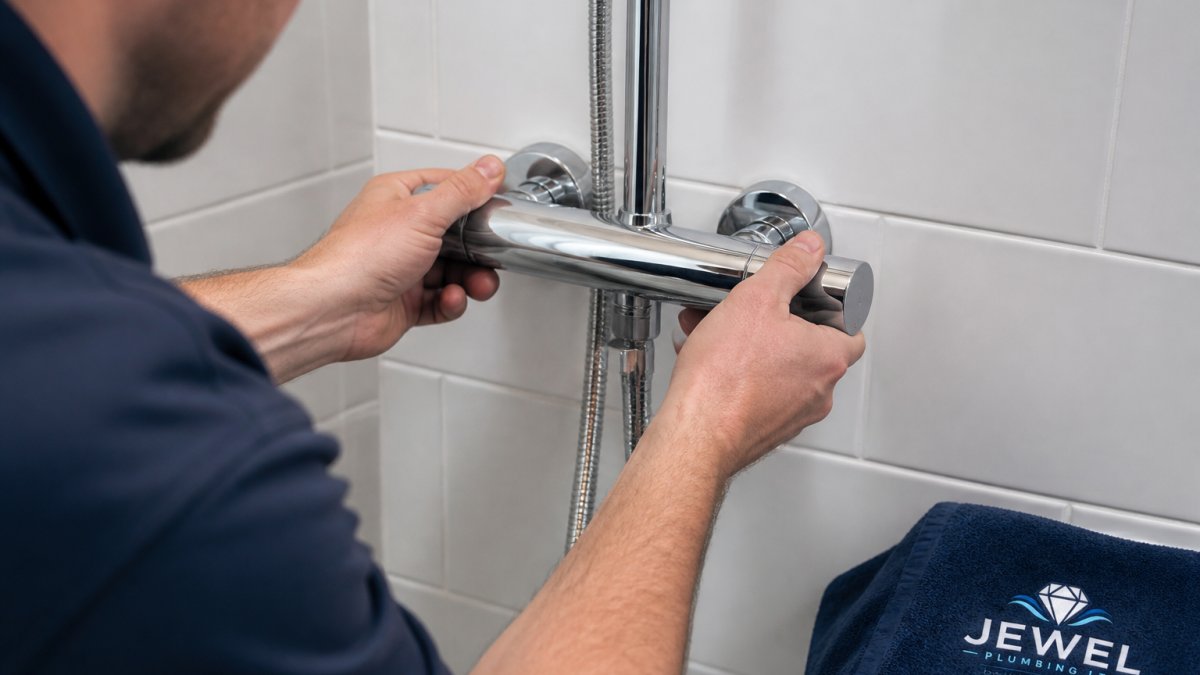
The technology is straightforward. Aerated taps mix air into the water stream, so a lower flow rate still feels full. Thermostatic shower valves hold temperature steady, which stops the wasteful habit of running a shower to find the right heat. Dual-flush and rimless WCs use a shorter, more effective flush path.
What most guides miss is that flow rate is capped by regulation, not preference. The Water Supply (Water Fittings) Regulations guidance sets out the requirements for fittings installed on mains-fed supplies, and compliant fittings carry a recognised approval mark. Buying unapproved fittings online to save a few pounds is a false economy: they can void insurance claims and fail at the first inspection.
How Water-Efficient Fixtures Compare
| Fixture | What Changes | Best For | Watch Out For |
|---|---|---|---|
| Aerated basin tap | Air mixed into the stream | Busy family bathrooms | Feels softer at very low pressure |
| Thermostatic shower valve | Holds temperature steady | Households with children | Needs balanced hot and cold supply |
| Dual-flush WC | Two flush volumes | Every bathroom | Older cisterns may not accept a new valve |
| Flow regulator | Caps litres per minute | High-pressure systems | Pointless on gravity-fed low pressure |
The honest limitation: efficiency fittings only deliver on a system that can support them. Fit a low-flow shower head on a gravity-fed supply and you get a weak shower, not a saving. The order matters: check pressure and pipework first, then choose the fittings.
Signs Bathroom Pipes Need Replacing Before You Renovate
Knowing when bathroom pipes need replacing saves you from tiling over a problem. The signs are usually visible long before a pipe fails, and a renovation is the cheapest moment to act.
Watch for these:
- Discoloured water on first draw, particularly brown or cloudy
- Repeated leaks at joints, even after tightening
- Visible corrosion, green staining on copper or white crusting on joints
- Poor or inconsistent pressure at one fixture but not others
- Damp patches on walls or ceilings below the bathroom
- Pipework in older properties that predates modern standards
The case for acting now is practical, not dramatic. Once a wall is open, replacing a run of pipe adds a fraction of what it costs to reopen the same wall later. If a pipe fails behind sealed tiles, you are paying for the repair, the removal and the re-tiling.
Bathroom Plumbing Upgrade Cost: What Drives the Price Up or Down
Bathroom plumbing upgrade cost depends on access, pipework condition and how much of the room is being opened up, not on the fixtures alone. Two bathrooms of the same size can differ substantially because one has accessible pipework and the other does not.
The main drivers:
- Access. Pipework behind a stud wall is quick to reach. Pipework buried in solid walls or under a concrete floor is not.
- Scope. A like-for-like swap of a tap or valve is a short job. Rerouting supply and waste runs is a renovation.
- System type. Combi, unvented and gravity-fed systems each need different components and different labour.
- Fixture specification. Standard fittings and premium brassware sit at very different price points.
- Age of the property. Older homes often need additional work to bring pipework up to current standards.
We do not quote from a distance. Pricing depends on the condition of what is behind the wall, and a figure given before anyone has looked is a figure that will change. Ask for a written scope and a breakdown before work starts, and treat any quote that arrives without a site visit with caution.
How Long Does a Bathroom Plumbing Renovation Take?
A bathroom plumbing renovation typically takes between one and three weeks, with the plumbing phase itself usually occupying the first few days. The full timeline depends on whether walls are being opened and how much of the pipework is being replaced.
A realistic sequence:
- Strip out and isolate the supply
- Assess and replace pipework as needed
- First-fix supply and waste runs
- Pressure test and check for leaks
- Fit fixtures and brassware
- Second-fix, seal and commission
Delays almost always come from the same source: discovering something once the wall is open. Old pipework, previous DIY work or a hidden leak can each add days. A contractor who builds a contingency into the schedule is being honest, not slow.
Choosing the Right Bathroom Plumbing Upgrades for Your Home
The right upgrade is the one that matches your water system, your usage and your budget, in that order. Start with the system, because it rules options in and out.
Our recommended approach:
- Check your system first. Combi, unvented and gravity-fed supplies accept different fittings. This single check eliminates half the wrong choices.
- Prioritise the hidden work. Pipework, valves and isolation points deliver more long-term value than any finish.
- Match fittings to pressure. High-pressure systems suit flow regulators and thermostatic valves. Low-pressure systems need different components entirely.
- Insist on approved fittings. Compliant fittings carry an approval mark and protect your insurance position.
- Get a written scope. A clear breakdown of labour and materials is the best protection against a renovation that spirals.
For homeowners in Knowle, Solihull and the wider West Midlands, Jewel Plumbing specialises in luxury bathroom installations and heating work, with a 5-star rated service. Because we work on both plumbing and heating, we can assess the whole system before recommending any upgrade, which is usually where the real savings are found.
If your boiler is also ageing, it is worth combining the assessment. Our heating specialists can check the boiler at the same time, so you get one clear picture of the system rather than two separate opinions.
Frequently Asked Questions
What are the benefits of upgrading bathroom plumbing?
Modern bathroom plumbing upgrades improve water pressure, reduce water waste, and lower energy bills. Water-saving fixtures cut consumption without sacrificing comfort, while new pipework eliminates leaks and hidden damage. Upgraded plumbing also adds value to your home and gives you reliable performance for years. For homeowners in Solihull and Knowle, professional installation ensures the work meets current standards and lasts.
Which bathroom plumbing upgrades can help reduce water use?
Water-saving bathroom fixtures such as dual-flush toilets, aerated taps, and low-flow shower heads are the most effective. These fixtures use less water per use while maintaining strong performance. A thermostatic shower valve also prevents temperature fluctuations, so you use less water adjusting the temperature. Upgrading from old, inefficient fittings can cut your water usage noticeably, which matters if you are on a meter.
Should you replace old pipes when renovating a bathroom?
If your home has lead, galvanised steel, or failing copper pipes, replacing them during a renovation is wise. Signs bathroom pipes need replacing include discoloured water, frequent leaks, and low pressure. Replacing pipes while walls and floors are open saves cost and disruption later. A professional plumber can assess pipe condition and recommend whether a full replacement or partial upgrade is right for your property.
How long does a bathroom plumbing renovation take?
A typical bathroom plumbing renovation takes one to three weeks, depending on the scope. A simple fixture swap may take a few days, while a full refurbishment with pipe rerouting can stretch to three weeks or more. Factors include the age of your home, whether you are moving the layout, and material availability. Your plumber should provide a clear timeline before work begins.
Old pipework, a system that was never designed for modern fittings, and a quote that changes once the wall is open: these are the three things that turn a bathroom project sour. Jewel Plumbing handles luxury bathroom refurbishments, reliable boiler installations and emergency plumbing across the West Midlands, with a 5-star rated service and a written scope before work begins. Get started with Jewel Plumbing and renovate once, properly.