 blog
Best Bathroom Fixtures for Luxury Designs: 2026 Guide
Table of Contents
- What Separates Luxury Bathroom Fixtures From Standard Fittings
- Luxury Bathroom Taps: Wall-Mounted, Deck-Mounted and Floor-Standing Options
- Thermostatic Shower Valves: Why Temperature Control Defines a Premium Shower
- Durable Bathroom Plumbing Materials: What Lasts Behind the Wall
- Brushed Brass Bathroom Fixtures: The Finish That Holds Its Look
- How to Coordinate Fixtures Across a Luxury Bathroom Design
- Common Mistakes When Choosing Luxury Bathroom Fixtures
- Conclusion: Planning Your Luxury Fixture Specification
- Frequently Asked Questions
Last Updated: 9 October 2026
What Separates Luxury Bathroom Fixtures From Standard Fittings
Walk into two bathrooms with near-identical tile and paint, and one will feel twice as expensive. The difference is rarely the tiling. It is the brassware, and the gap between the best bathroom fixtures for luxury designs and the fittings sold in a standard trade pack comes down to three things: material thickness, valve engineering and finish quality.
A cheap tap and a premium tap look similar on day one. Two years later, one still runs smoothly and the other drips, pits or wobbles.
A luxury bathroom fixture is a tap, valve, shower or waste made from solid, corrosion-resistant material with a serviceable internal cartridge and a finish applied to a thickness that survives daily cleaning. Standard fittings often use thinner castings, sealed cartridges and plated finishes that wear through.
The Three Qualities That Define a Luxury Fixture
- Material weight and grade. Solid brass throughout, not a brass-plated zinc body.
- Serviceable internals. A replaceable ceramic cartridge rather than a sealed unit you throw away.
- Finish depth. PVD or heavy electroplating that resists scratching and limescale.
Get those three right and the fixture will outlast the bathroom around it. Get them wrong and you will be replacing taps before the grout has discoloured.
Luxury Bathroom Taps: Wall-Mounted, Deck-Mounted and Floor-Standing Options
Choosing between mounting types is the first real decision in any luxury specification, and it affects plumbing, cleaning and the whole look of the room.
- Deck-mounted taps sit on the basin or bath rim. Simplest to fit and service, and the safest choice for a retrofit.
- Wall-mounted taps emerge from the wall above the basin. They free up the deck for a cleaner look but require pipework set into the wall before tiling.
- Floor-standing taps rise from the floor beside a freestanding bath. The most dramatic option, and the one that needs the most planning.
Are Wall-Mounted Taps Worth the Extra Plumbing Work?
Wall-mounted taps are worth it when the wall is already being opened up for a renovation. If you are tiling over a solid wall with no access panel, a future cartridge change becomes a demolition job. That is the trade-off nobody mentions at the showroom.
Deck-mounted taps remain the practical choice for most refurbishments. Floor-standing and wall-mounted designs suit projects where the plumbing is being renewed anyway.
Thermostatic Shower Valves: Why Temperature Control Defines a Premium Shower
A thermostatic shower valve is a mixing valve that holds your chosen water temperature steady, even when someone else runs a tap or the cold supply shifts. It is the component that separates a shower you tolerate from one you look forward to.
The mechanism is straightforward. A wax or bimetallic element inside the valve expands and contracts with temperature, adjusting the hot and cold mix in real time. A standard manual valve cannot do this, which is why pressure changes elsewhere in the house cause that sudden cold shock.
Two practical points matter when specifying one:
- Check the minimum operating pressure. Many thermostatic valves need a set pressure to work properly, so confirm it matches your system before buying.
- Look for a cool-touch body. This keeps the valve surface safe to touch, which matters in a family bathroom.
Thermostatic control is not a gimmick. It is the feature that most changes how a shower feels day to day.
Durable Bathroom Plumbing Materials: What Lasts Behind the Wall
The parts you never see decide how long the parts you do see will last. Durable bathroom plumbing materials are the foundation of any luxury installation, and skimping here undoes every visible upgrade.
- Solid brass for tap bodies and valve housings resists corrosion and holds a thread.
- Copper pipework remains the standard for concealed runs, with a long proven service life.
- Cross-linked polyethylene (PEX) is common for new builds and offers flexibility around joists.
- Ceramic cartridges outlast rubber washers by a wide margin and resist limescale better.
What most guides miss is that the material behind the wall is where budget cuts hide. A supplier can shave cost by using a thinner casting or a plastic internal body, and you may not notice until the fixture fails.
Match the material to the water in your area. Hard water accelerates wear on cheap internals, so a household on a hard supply benefits most from solid brass and ceramic cartridges.
Brushed Brass Bathroom Fixtures: The Finish That Holds Its Look
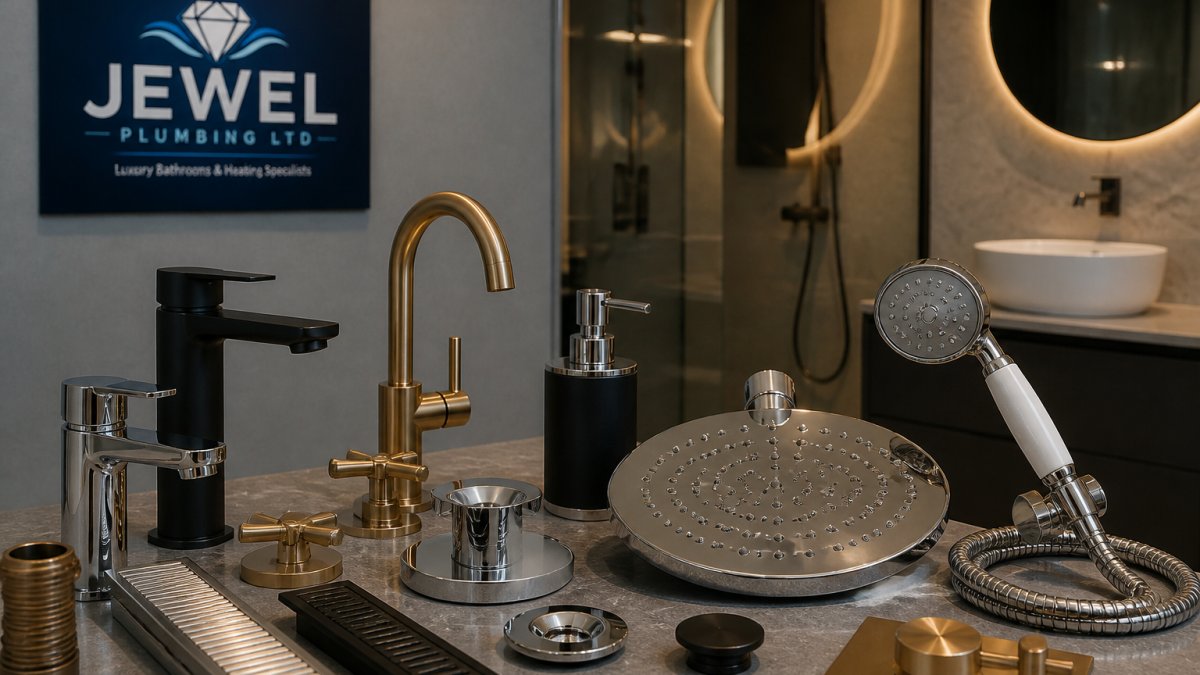
Brushed brass bathroom fixtures have moved from trend to staple, and the reason is practical as much as aesthetic. The satin, warm finish hides water spots and fingerprints far better than polished chrome, so it looks cleaner between cleans.
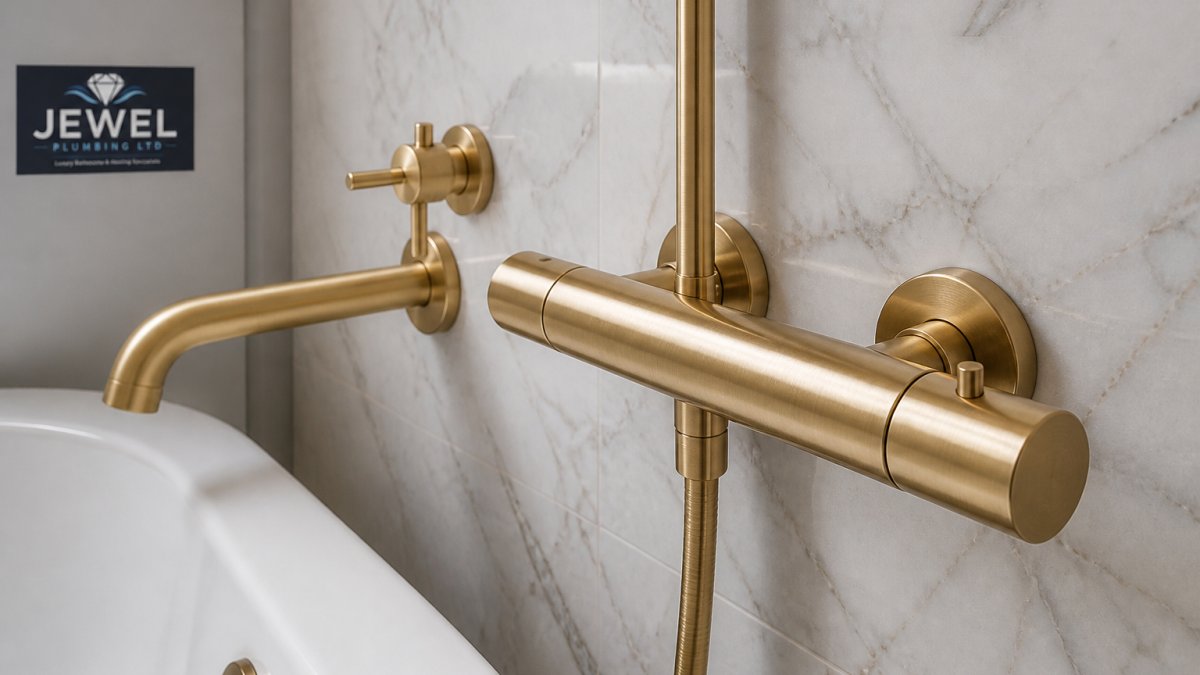
Finish quality is where the money shows. A properly applied PVD coating bonds to the brass at a molecular level and resists scratching and tarnishing. A thin decorative plating will wear through at the points you touch most, usually within a few years.
Caring for brushed brass is simple. Avoid abrasive cleaners and acidic limescale removers, which dull the finish. A soft cloth and mild soapy water keep it looking new. The one drawback is that brushed finishes show hard-water deposits if you leave them, so a quick wipe after use goes a long way.
How to Coordinate Fixtures Across a Luxury Bathroom Design
Coordination is what makes a room feel designed rather than assembled. The rule is simple: pick one finish and one design family, then repeat it everywhere.
- Match the finish across every visible fitting. Taps, shower valves, wastes, robe hooks and towel rails should share the same tone.
- Stay within one design language. A slim, cylindrical tap pairs badly with a chunky, traditional valve.
- Repeat shapes, not just colours. If your tap has a lever handle, carry that lever through to the shower control.
| Fixture | Finish to Match | Design Family | Priority |
|---|---|---|---|
| Basin and bath taps | Brushed brass | Slim lever | High |
| Shower valve | Brushed brass | Slim lever | High |
| Wastes and traps | Brushed brass | Minimal | Medium |
| Towel rail and hooks | Brushed brass | Slim lever | Medium |
The mistake is treating each fixture as a separate purchase. Buy them as a set, from one range where possible, and the room will read as intentional.
Common Mistakes When Choosing Luxury Bathroom Fixtures
Most disappointing luxury bathrooms fail for the same handful of reasons, and nearly all of them are avoidable at the specification stage.
- Buying on looks alone. A beautiful tap with a sealed cartridge becomes scrap when it drips.
- Ignoring water pressure. A premium shower valve that needs high pressure will underperform on a gravity system.
- Skipping the access panel. Concealed valves and wall-mounted taps need a way in for future servicing.
- Mixing finishes. Two similar-but-not-identical brasses look like a mistake, not a choice.
- Cutting the budget behind the wall. Cheap pipework and fittings undermine expensive visible brassware.
The throughline across all five is the same: a luxury bathroom is a system, not a shopping list. Each choice affects the next.
Conclusion: Planning Your Luxury Fixture Specification
Getting the best bathroom fixtures for luxury designs right is a planning exercise, not a shopping spree. Decide your finish and design family first, confirm your water pressure, and insist on solid brass and serviceable cartridges before you fall for a look.
Our luxury bathroom refurbishments cover the full specification, from concealed pipework and thermostatic valves to the brushed brass finish on top, and our 5-star rated team handles the plumbing. If you are planning a renovation across Knowle, Solihull or the wider West Midlands, get started with Jewel Plumbing and build a bathroom that still looks and works like new years from now.
Frequently Asked Questions
What bathroom fixtures make a bathroom look luxurious?
The fixtures that read as luxury are usually the ones you touch and see most: wall-mounted taps, a thermostatic shower valve, and a freestanding bath filler. Finish matters as much as shape, which is why brushed brass and brushed nickel have overtaken polished chrome in high-end schemes. Consistency is the real signal. When every visible fitting shares one finish and one design language, the room looks considered rather than assembled from whatever was on offer.
Which materials are best for durable bathroom plumbing materials?
For pipework and concealed fittings, brass and copper remain the most reliable choices because they resist corrosion and handle heat well. Behind the wall, the material you cannot see determines how long the visible fixtures last. Cheap plastic internal cartridges are the most common failure point in taps and shower valves, so ask your installer what sits inside the fitting, not just what it looks like on the outside.
Are thermostatic shower valves worth the investment?
Yes, particularly in households where more than one person uses water at once. A thermostatic valve holds the outlet temperature steady even when someone runs a tap downstairs, which removes the sudden cold shock that comes with a standard mixer. The valve also has a maximum temperature stop, which reduces scald risk. For a luxury bathroom, it is one of the few upgrades you will notice every single day.
How do you choose bathroom fixtures that match across a scheme?
Pick your finish first, then your tap style, then your accessories, in that order. Decide on one finish for every visible fitting, including the waste, the robe hooks and the towel rail, because mismatched small items undo an otherwise expensive-looking room. If you want contrast, use it between the fixture finish and the tile or stone, not between two different metal finishes. A single finish applied consistently always looks more expensive than a mix.