 blog
Best Heating Systems for West Midlands Homes: 2026 Guide
Table of Contents
- Quick Comparison: Best Heating Systems at a Glance
- Air Source Heat Pump for Homes: Is It Right for You?
- Gas Boiler Replacement Options: What to Choose
- Heating System Running Costs: What to Expect
- Heating Options for Older Homes: Practical Solutions
- How to Choose the Best Heating System for Your Home
- Conclusion
- Frequently Asked Questions
Last Updated: 17 October 2026
Quick Comparison: Best Heating Systems at a Glance
Choosing the best heating systems for West Midlands homes starts with matching the technology to the property, not the other way round. At Jewel Plumbing, we see the same pattern across Knowle, Solihull and the wider region: homeowners replace a boiler with a like-for-like unit because it feels safe, then wonder why bills stay high and cold spots remain.
The truth is that no single system suits every house. A 1930s semi with solid walls behaves nothing like a new-build in Dickens Heath. Below is a summary of the main options we are asked about, so you can see how they compare before reading the detail.
| System | Best For | Key Strength | Main Trade-Off |
|---|---|---|---|
| Air source heat pump | Well-insulated homes with outdoor space | Lower running costs, no gas supply needed | Higher upfront cost, needs larger radiators |
| Combi boiler replacement | Smaller homes, low hot water demand | Cheapest and quickest swap | Struggles with multiple bathrooms |
| System or heat-only boiler | Larger homes, high hot water demand | Reliable supply to several taps | Needs a cylinder and more space |
| Hybrid setup | Older properties not ready for a full heat pump | Spreads cost over time | Two systems to maintain |
| Electric or infrared heating | Flats, well-sealed rooms, extensions | Simple, no pipework | Expensive to run as main heat source |
This guide from Jewel Plumbing walks through each option, what it costs to run, and how to decide.
Air Source Heat Pump for Homes: Is It Right for You?
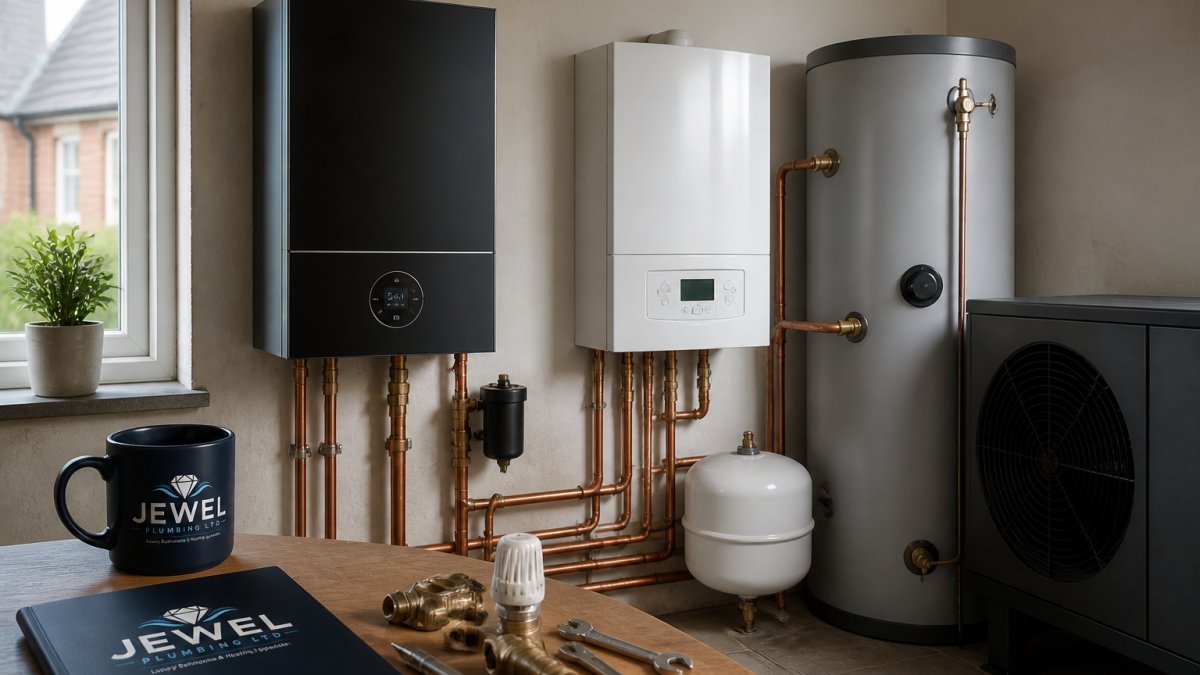
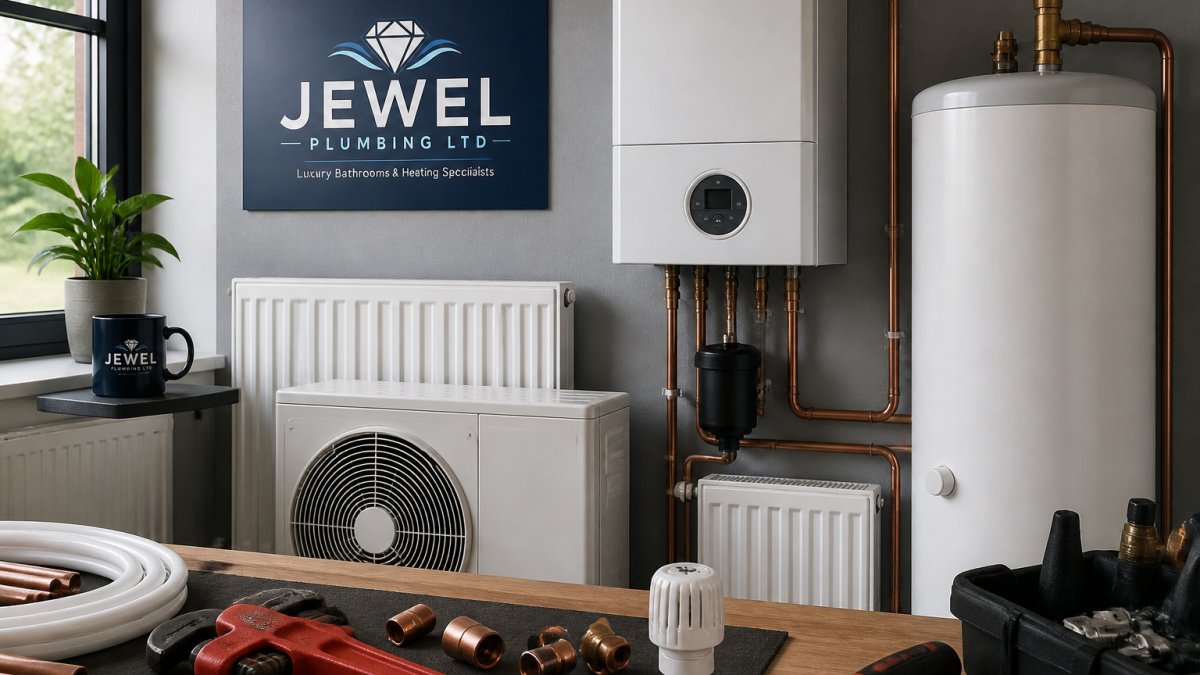
An air source heat pump for homes is a system that extracts heat from outside air and transfers it indoors at a lower temperature than a boiler. It runs on electricity rather than gas, and it works best in properties that hold heat well.
So is it right for you? In our experience, yes, if your home is insulated to a reasonable standard and you have space outside for the unit. The catch most guides skip: heat pumps deliver warmth at lower temperatures, so existing radiators often need upsizing. Skip that step and rooms feel lukewarm no matter how good the pump is.
A common mistake is sizing the pump to match the old boiler's output. That is the wrong approach. The pump should be sized to the property's heat loss, which is why a proper survey matters far more than the brochure specification.
- Best for: homes with cavity wall and loft insulation, underfloor heating, or a willingness to upgrade radiators
- Watch out for: listed buildings, conservation areas and tight side access
- Plan for: a survey before you commit to anything
The government's boiler upgrade scheme guidance sets out current grant eligibility, so check the official page rather than relying on secondhand claims.
Gas Boiler Replacement Options: What to Choose
Gas boiler replacement options come down to three types, and the right one depends on how many bathrooms you have and how much space you can spare.
A combi boiler heats water on demand and needs no cylinder. It suits smaller homes with one bathroom and moderate hot water use. A system boiler pairs with a hot water cylinder and handles several outlets at once. A heat-only boiler works with a tank in the loft and is often the simplest like-for-like swap in older properties with existing pipework.
For most households we would steer you towards a system boiler if you have two or more bathrooms, and a combi if you do not. The one drawback of a combi is that running two showers at once will disappoint you.
Whatever you choose, confirm the installer is registered with the relevant competent person scheme, and ask for the warranty terms in writing before work begins.
Heating System Running Costs: What to Expect
Running costs are where the real decision lives. A heat pump and a gas boiler can have similar upfront costs once grants are applied, but the ongoing figures diverge sharply, and they depend on your tariff, insulation and how you use the controls.
We will not quote you a figure here, because honest numbers depend on your property and your energy contract. What we can tell you is how to think about it:
- Insulation first. Every pound spent on loft and cavity insulation reduces running costs regardless of which system you pick.
- Controls matter. Zoned heating with smart thermostats cuts waste in rooms you rarely use.
- Tariff choice. Heat pumps pair well with time-of-use electricity tariffs; boilers do not benefit in the same way.
- Servicing. An annual service keeps efficiency up and catches faults early.
For current guidance on energy efficiency in the home, the Energy Saving Trust's advice on heating your home is a reliable starting point.
Heating Options for Older Homes: Practical Solutions
Heating options for older homes need a different playbook. Solid walls, single glazing and original pipework mean a straight heat pump swap often falls short without preparation.
Our view: do not rush. The sensible sequence for a period property is insulation and draught-proofing first, then a system that matches the improved heat loss. A hybrid setup, pairing a heat pump with an existing boiler, lets you spread the cost and keep a gas backup for the coldest weeks. Infrared panels work well in specific rooms such as extensions or conservatories where running pipework is impractical.
What most guides miss is that older homes often have oversized radiators already, which is an advantage. Those original cast-iron radiators hold heat well and can suit a heat pump better than modern slimline panels.
How to Choose the Best Heating System for Your Home
Choosing the best heating system for your home comes down to four questions: how well insulated is the property, how much hot water do you need, what space do you have, and what is your budget over ten years rather than one?
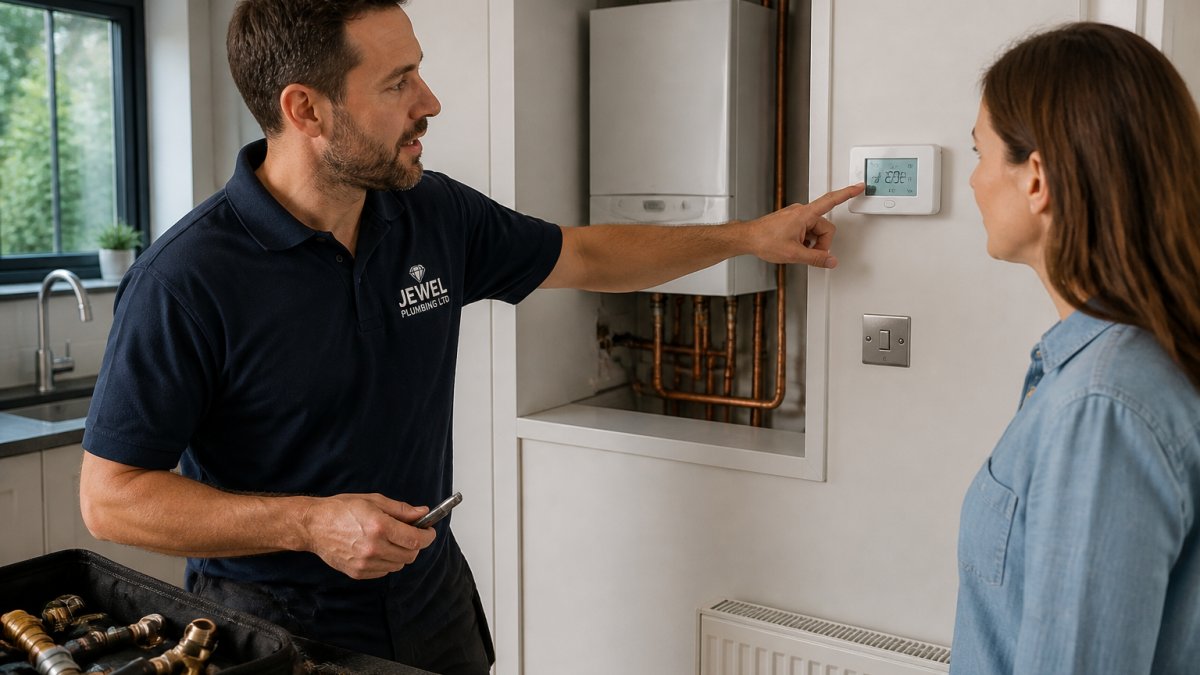
Work through this checklist before you request quotes:
- Confirm loft and cavity wall insulation status
- Count bathrooms and simultaneous hot water demand
- Measure outdoor space for a heat pump unit
- Check current radiator sizes against likely heat pump requirements
- Confirm grant eligibility on the official government page
- Ask for a full heat loss survey, not a visual inspection
- Get the warranty, service schedule and payment terms in writing
At Jewel Plumbing, we carry out heating surveys across the region and talk homeowners through the trade-offs honestly, including when a straight boiler replacement is genuinely the better call.
Conclusion
The hardest part of this decision is not picking a technology, it is resisting the pressure to replace like-for-like without asking whether the property has changed. Insulation, controls and correct sizing matter more than the badge on the unit.
If you want a straight answer on which system suits your home, Jewel Plumbing offers expert heating surveys, reliable boiler installations and ongoing support across the region. Get started with Jewel Plumbing and choose a heating system built around your property, not a sales target.
Frequently Asked Questions
Are heat pumps suitable for older homes?
Heat pumps can work in older homes, but the property needs a thorough assessment first. Insulation levels, radiator sizes and pipework all affect performance. Many period properties in the West Midlands benefit from fabric upgrades before a heat pump is fitted. A qualified installer should carry out a room-by-room heat loss survey to confirm suitability and specify the correct output. In some cases, hybrid systems or high-temperature heat pumps offer a practical route.
Is a heat pump cheaper to run than a gas boiler?
Running costs depend on your tariff, the heat pump's efficiency and how well the home retains heat. A well-installed air source heat pump for homes can be cheaper to run than a gas boiler, especially when paired with a time-of-use electricity tariff. However, without good insulation and correctly sized radiators, savings may not materialise. Always request a running cost estimate based on your property's heat loss and current energy prices before committing.
What should I consider before replacing my boiler?
Start with a heat loss assessment and a review of your existing radiators and pipework. Consider your budget, the property's age and insulation, and whether you plan to stay long term. Check the available gas boiler replacement options, including combi, system and heat-only models, and ask about warranty terms and ongoing maintenance costs. Getting three detailed quotes helps you compare like for like and avoid hidden extras.
How do I choose the right size heating system?
Correct sizing relies on a room-by-room heat loss calculation, not a rule of thumb based on floor area alone. An oversized boiler cycles inefficiently and costs more to run, while an undersized one struggles in cold weather. Ask your installer for the calculated heat demand in kilowatts and match the system output to it. For heat pumps, also confirm the proposed flow temperature and radiator schedule.