 how-to
Common Causes of Noisy Boiler Systems: 2026 Fixes
Table of Contents
- Why Your Noisy Boiler Needs Attention
- Boiler Making Banging Noise: Causes and Fixes
- Boiler Whistling or Kettling: What It Means
- Boiler Gurgling Noise: Trapped Air and Blockages
- How to Repressurise a Boiler to Stop the Noise
- When to Call a Gas Safe Registered Engineer
- Preventing Future Boiler Noise
- Conclusion
- Frequently Asked Questions
Last Updated: October 7, 2026
Why Your Noisy Boiler Needs Attention
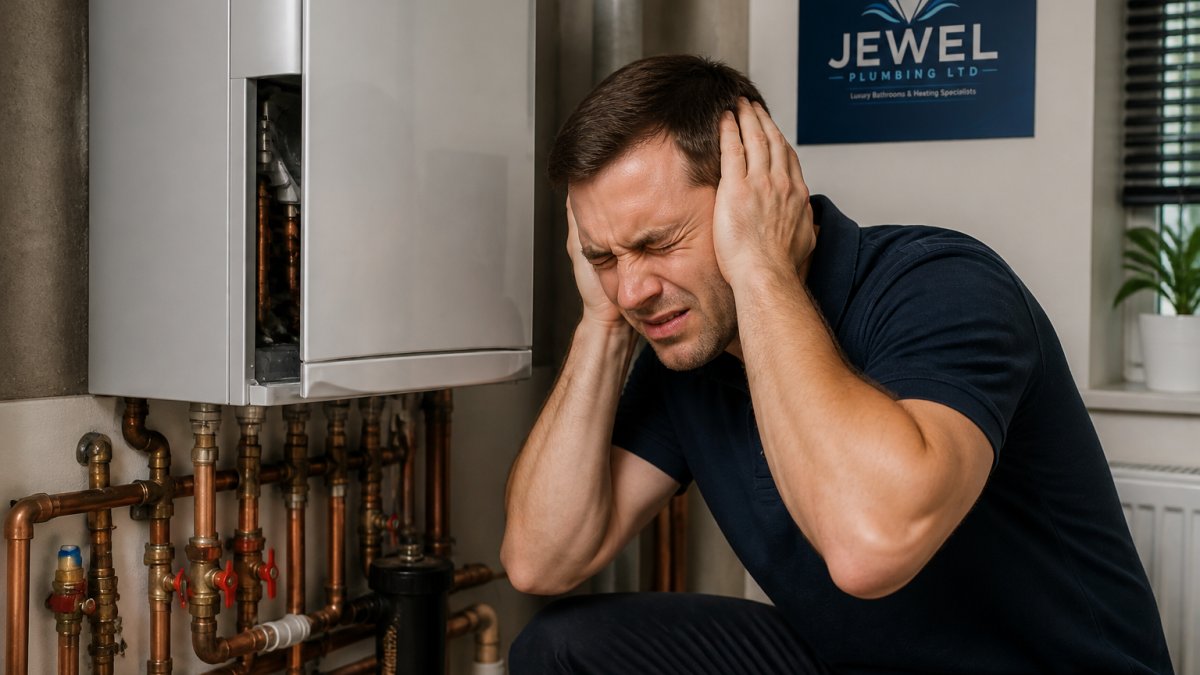
A noisy boiler is more than a nuisance. Strange bangs, whistles and gurgles usually point to a real fault inside the system, and ignoring them tends to make the repair bill bigger. The good news is that most common causes of noisy boiler systems are fixable.
The trick is knowing which sound means what. A banging noise is not the same problem as a whistle, and neither is the same as a gurgle. Each one points to a different fault, and each has its own fix.
Below, we break down the main culprits, show you how to repressurise a boiler safely, and explain when to stop and call a Gas Safe registered engineer.
Gas Safe Register guidance on boiler safety
Boiler Making Banging Noise: Causes and Fixes
A boiler making a banging noise is usually dealing with limescale or trapped air. Both problems force the water to heat unevenly, and that uneven heating is what you hear.
Here are the two most common triggers:
Limescale Build-Up in the Heat Exchanger
Hard water leaves mineral deposits inside the heat exchanger over time. These deposits trap heat, so water boils in pockets and creates a knocking sound. In hard water areas, this builds up faster.
The fix depends on how bad it is. A light build-up can sometimes be cleared with a chemical flush. A heavy one may need a power flush or, in worse cases, a new heat exchanger. A common mistake is turning the boiler temperature up to "burn off" the scale. That makes it worse.
Trapped Air in the System
Air pockets stop water from flowing smoothly. When the boiler fires, that trapped air expands and bangs against the pipework.
Bleeding your radiators usually clears it. Work through each radiator from the top of the house down, and you should hear the hiss of escaping air.
Boiler Whistling or Kettling: What It Means
Boiler whistling or kettling sounds like a kettle coming to the boil, and it almost always traces back to water flow problems. The water is not moving through the system fast enough, so it overheats in one spot.
Two things cause this most often:
- Low water pressure restricting the flow
- A failing pump that cannot push water properly
- A blocked or scaled heat exchanger narrowing the path
Water Pressure and Flow Rate Issues
Check the pressure gauge on the front of your boiler first. Most boilers run best between 1 and 1.5 bar when cold. If the needle sits below 1 bar, the system needs topping up.
If the pressure is fine but the whistling continues, the pump is the next suspect. A pump that is slowing down or clogged will not circulate water properly, and the boiler will keep kettling until it is serviced or replaced.
Boiler Gurgling Noise: Trapped Air and Blockages
A boiler gurgling noise is nearly always trapped air or a partial blockage. The sound is water and air mixing where they should not.
Common triggers include:
- Air trapped after a recent drain-down or repair
- A blocked condensate pipe on a condensing boiler
- Sludge build-up in the pipework
- A faulty automatic air vent
Start by bleeding the radiators. If that does not clear it, check the condensate pipe for blockages, especially in winter when it can freeze. Sludge is a bigger job and usually needs a professional flush.
Energy Saving Trust advice on heating systems
How to Repressurise a Boiler to Stop the Noise
Repressurising a boiler is a straightforward job you can do yourself in most cases. It takes about five minutes and only needs the filling loop.
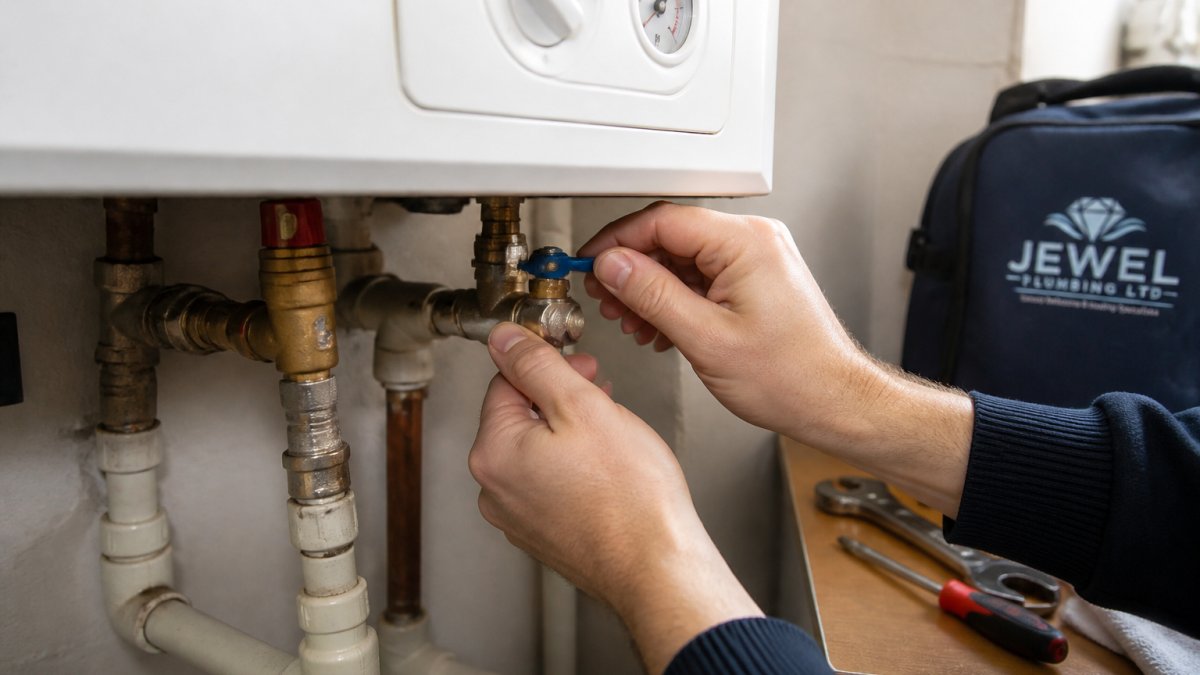
Step-by-Step Pressure Check and Refill
- Turn the boiler off and let it cool for at least an hour.
- Find the pressure gauge on the front panel and note the reading.
- Locate the filling loop, a braided hose with two valves, usually under the boiler.
- Open both valves slowly to let water in.
- Watch the gauge and stop at 1 to 1.5 bar.
- Close both valves firmly once the target is reached.
- Turn the boiler back on and check for leaks around the loop.
Expected result: The gauge holds steady and the noise quietens within a day.
When to Call a Gas Safe Registered Engineer
Call a Gas Safe registered engineer if the noise continues after bleeding and repressurising. Some faults sit inside the boiler casing, and by law only a Gas Safe registered engineer can work on the gas side of your appliance.
Reach for the phone when you notice:
- A yellow or orange flame instead of blue
- A smell of gas
- The pressure will not hold after refilling
- Banging or kettling that returns within days
- Any leak from the boiler itself
Gas Safe Register find an engineer tool
Preventing Future Boiler Noise
Prevention comes down to three habits: annual servicing, correct pressure, and treated water.
An annual service catches limescale and wear before they turn into noise. Keep an eye on the pressure gauge and top up only when needed. In hard water areas, a scale inhibitor or water softener makes a real difference to how long your heat exchanger lasts.
| Problem | Likely Cause | Quick Fix | Call an Engineer If... |
|---|---|---|---|
| Banging | Limescale or trapped air | Bleed radiators | Noise returns within weeks |
| Whistling or kettling | Low pressure or failing pump | Check and top up pressure | Pump needs replacing |
| Gurgling | Air or blocked condensate pipe | Bleed radiators, check pipe | Sludge or recurring blockages |
Conclusion
Boiler noise is your system telling you something is wrong, and the earlier you act, the cheaper the fix usually is. Bleeding radiators and checking pressure solves most cases, but recurring sounds point to a deeper fault.
At Jewel Plumbing, our heating specialists handle boiler diagnostics, repairs and installations across Knowle, Solihull and the wider West Midlands. We offer emergency plumbing services, reliable boiler installations and 5-star rated workmanship. Get started with Jewel Plumbing and put an end to the noise for good.
Frequently Asked Questions
Why is my boiler making a banging noise?
A banging noise usually points to limescale build-up in the heat exchanger or trapped air in the system. Limescale causes water to overheat and create steam pockets that collapse violently, while trapped air can make pipes shudder. In hard water areas, descaling the heat exchanger often solves it. If the noise persists, a Gas Safe registered engineer should inspect the system.
What causes a boiler to whistle or kettle?
Boiler whistling or kettling happens when limescale narrows the heat exchanger channels, causing water to boil unevenly and produce high-pitched sounds. It can also be triggered by incorrect water pressure or a faulty pump. A chemical flush or power flush can remove the scale, but if the noise continues, the heat exchanger may need replacing.
Can low boiler pressure cause noise?
Yes. Low pressure allows air to enter the system, leading to gurgling, banging, or humming. Check the pressure gauge; most boilers should sit between 1.0 and 1.5 bar when cold. If it's below 1.0, repressurise using the filling loop. Persistent pressure loss may indicate a leak, so call a professional if it drops repeatedly.
When should I call a Gas Safe registered engineer about a noisy boiler?
Call a Gas Safe registered engineer if you smell gas, see yellow flames instead of blue, or if the boiler makes loud banging, whistling, or gurgling that doesn't stop after repressurising. Any noise accompanied by a loss of heating or hot water also warrants an urgent call. DIY fixes are limited to repressurising; internal repairs must be done by a qualified professional.