 how-to
Why Professional Plumbing Is Essential for Bathrooms
Last Updated: 24 October 2026
Quick Summary
Professional plumbing is the installation and maintenance of bathroom pipework, waste runs and water supplies by a qualified, insured tradesperson who works to current regulations. It is essential because hidden leaks, poor falls and undersized waste pipes are invisible at handover and only surface months later, when fixing them means removing tiles. Correcting cheap work often costs far more than doing the job properly first time.
- Ask for Gas Safe registration, WaterSafe approval and current public liability insurance before work starts.
- A shower tray sealed without a proper fall lets water track along joists, damage rarely covered by insurance.
- Bathroom plumbing cost is driven by access, not parts, so low quotes usually exclude key stages.
- Gas work, relocated waste runs and wet room installations should always be done by a professional.
- Book a bathroom plumbing assessment before demolition to find problems while they cost a conversation.
Table of Contents
- Why Professional Plumbing Is Essential for Bathrooms
- Bathroom Plumbing Problems That Follow DIY or Cheap Work
- Plumber Qualifications to Check Before Anyone Lifts a Tile
- How to Choose a Plumber for a Bathroom Project
- What Drives Bathroom Plumbing Cost, and Where Cheap Quotes Hide the Rest
- When a Bathroom Job Is Genuinely a Professional's Work
- Book a Bathroom Plumbing Assessment Before the First Tile Comes Off
- Frequently Asked Questions
Why Professional Plumbing Is Essential for Bathrooms
Professional plumbing is the installation and maintenance of bathroom pipework, waste runs and water supplies by a qualified, insured tradesperson who works to current regulations. At Jewel Plumbing, we see the difference between a proper installation and a rushed one most clearly about eighteen months after the tiles go down.
Bathrooms are the hardest-working room in the house. Water sits behind every wall, under every tray and inside every boxing. Get the pipework right and nobody ever thinks about it again. Get it wrong and the first sign is usually a damp patch on a ceiling below.
Below, we explain what cheap work actually costs, which qualifications to check, and when a job is genuinely beyond a DIY fix.
Bathroom Plumbing Problems That Follow DIY or Cheap Work
Most bathroom failures are not dramatic. They start small, hide well, and surface after the warranty conversation has ended. Here are the two that cause the most damage.
Leaks You Cannot See Until the Ceiling Stains
Hidden leaks are the most expensive kind. A joint that weeps slightly behind a tiled wall will not show up for months. By the time a stain appears downstairs, the plasterboard, insulation and floor structure have all been wet for a long time.
A common mistake is sealing over a suspect joint rather than testing it. Silicone hides the symptom, not the cause.
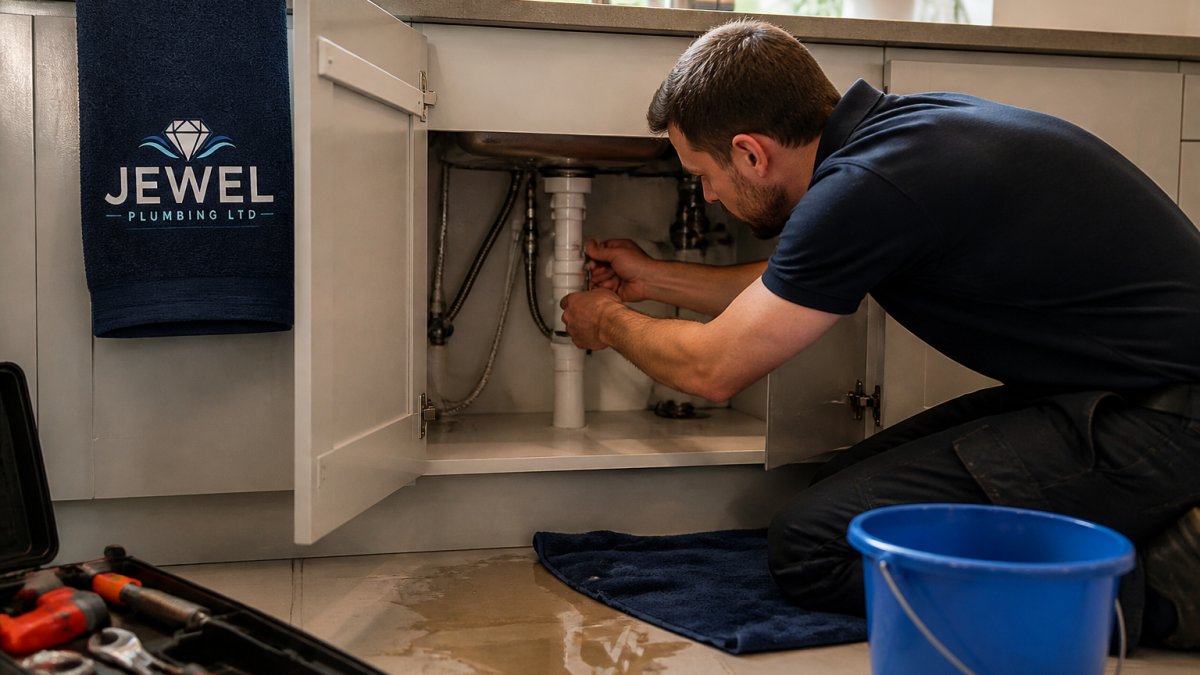
Watch out: a shower tray sealed without a proper fall underneath will let water sit and track along the joists, and that damage is rarely covered by home insurance once it is classed as poor workmanship.
Poor Falls, Traps and Waste Runs
Waste water has to travel. That needs a consistent fall on the pipe, a correctly sized trap, and a run that does not fight gravity.
- A shallow fall means slow drainage and standing water
- An undersized waste pipe blocks repeatedly
- A trap fitted at the wrong depth lets smells back into the room
- Boxing in pipework without access makes every future repair a demolition job
These faults are invisible at handover and obvious a year later. Our guide on the signs of poor quality plumbing work sets out what to check so you can spot problems early. Correcting them means removing tiles, which is why the cheapest quote so often becomes the most expensive job.
Plumber Qualifications to Check Before Anyone Lifts a Tile
Ask for three things before work starts: a Gas Safe registration if gas is involved, WaterSafe or equivalent approval for the water supply work, and current public liability insurance. Any legitimate plumber will produce all three without hesitation.
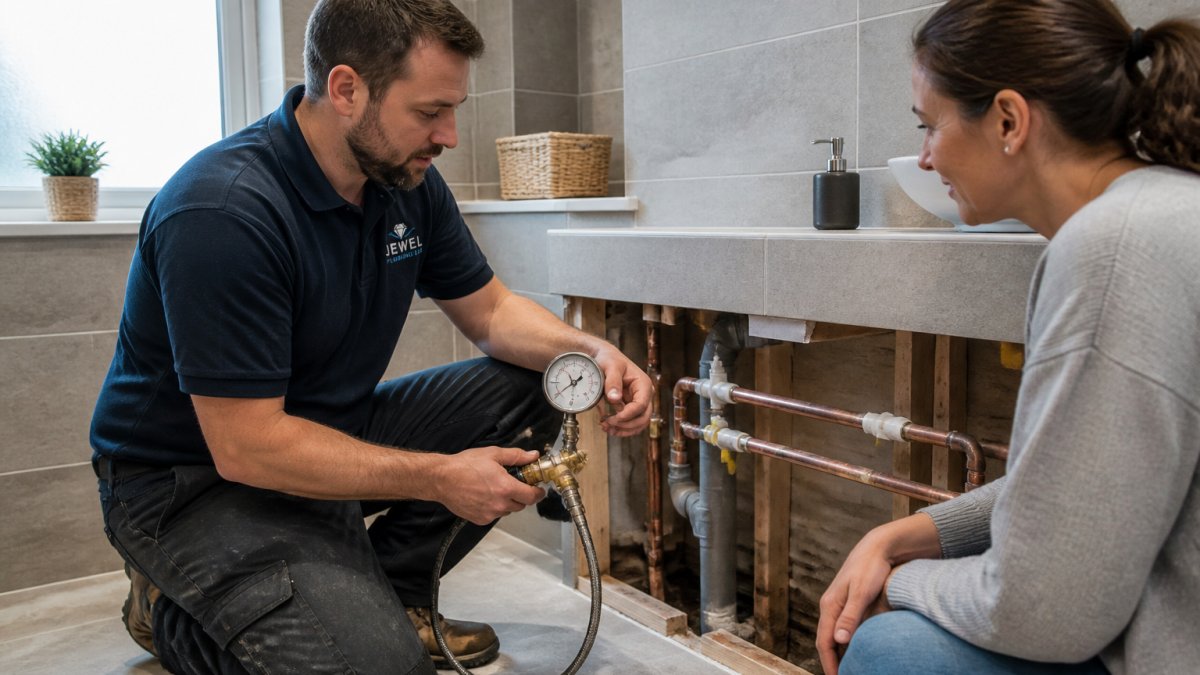
Water Regulations, Gas Safe and Public Liability Cover
Gas Safe registration is a legal requirement for anyone working on gas appliances. You can check a registration directly on the Gas Safe Register.
WaterSafe membership shows a plumber has been assessed against the Water Fittings Regulations, which govern how fittings connect to the mains supply.
Public liability cover protects you if something goes wrong. Ask to see the certificate, not just the policy name.
If you want a full walkthrough of what to request and how to verify each one, our guide on how to check plumbing contractor credentials covers Gas Safe, WaterSafe and insurance step by step.
How to Choose a Plumber for a Bathroom Project
Choose on evidence, not on the lowest number. A bathroom is a multi-trade project, so the person coordinating it matters as much as the person with the spanner.
Work through this checklist before you commit:
- Ask for the Gas Safe and WaterSafe numbers and verify them yourself
- Request the public liability certificate and check the expiry date
- Ask for two recent local references you can actually ring
- Confirm who is on site each day and who supervises
- Get the quote in writing, itemised by stage
- Ask what happens if the wall behind the tiles is wet
- Confirm the snagging and aftercare process in writing
The last two matter most. Wet substrate behind tiles is the single most common reason a bathroom budget moves, and it is not visible until the room is stripped.
Our guide to hiring professional bathroom fitters in Solihull sets out what to ask, what it costs and how long a project typically runs.
What Drives Bathroom Plumbing Cost, and Where Cheap Quotes Hide the Rest
Bathroom plumbing cost is driven by access, not by parts. Pipework is cheap; getting to it is not.
The main cost drivers are:
- Whether the layout moves, which means new waste runs and supply pipes
- The condition of what is behind the existing tiles
- Whether the floor is solid or suspended
- Access for waste pipes to the stack
- Making good and re-tiling after the work
A quote that looks low usually excludes one of these. The exclusions sit in the small print, and they surface as variations once the room is open.
Ask every plumber what their quote excludes. Then ask what a typical variation looks like on a job like yours. The answer tells you more than the headline figure. For a practical breakdown of contingency planning, see our advice on avoiding hidden bathroom renovation costs.
When a Bathroom Job Is Genuinely a Professional's Work
Some jobs are DIY-able. Others are not, and the line is clearer than most people think.
Call a professional for:
- Any work involving gas, including boiler connections and gas hobs
- New or relocated waste runs, which must meet building regulation requirements
- Moving a soil stack or altering the main drainage
- Anything requiring notifiable electrical work in a bathroom zone
- Installing a wet room or level-access shower, where falls must be exact
- Any job where the existing pipework is unknown or clearly old
Changing a tap washer or swapping a shower head is fine to do yourself. Altering the pipework behind the wall is not a job to learn on.
Watch out: unvented hot water cylinders are covered by specific regulations and must be installed by someone holding the right competence. Getting this wrong is a safety issue, not a cosmetic one.
Some jobs are fine to do yourself, but these are the ones that genuinely need a professional.
| Job | Who should do it |
|---|---|
| Gas work, including boiler connections and gas hobs | Professional |
| New or relocated waste runs | Professional, must meet building regulations |
| Moving a soil stack or altering main drainage | Professional |
| Notifiable electrical work in a bathroom zone | Professional |
| Wet room or level-access shower installation | Professional, falls must be exact |
| Existing pipework unknown or clearly old | Professional |
| Changing a tap washer or swapping a shower head | Fine to do yourself |
| Altering pipework behind the wall | Not a job to learn on |
Book a Bathroom Plumbing Assessment Before the First Tile Comes Off
An assessment before demolition is the cheapest part of any bathroom project. It is also the step most homeowners skip.
A proper assessment covers the existing pipework, the waste route, the water pressure, the substrate behind the tiles and the condition of the boiler feeding the room. Finding a problem at that stage costs a conversation. Finding it after tiling costs a rebuild.
Jewel Plumbing provides luxury bathroom refurbishments, boiler installations and emergency plumbing support across the West Midlands, with a 5-star rated service. Our team surveys before work begins so the quote reflects what is actually there.
Get started with Jewel Plumbing and book a bathroom plumbing assessment before the first tile comes off.
Frequently Asked Questions
Why should you hire a professional plumber for a bathroom renovation?
A bathroom is the most plumbing-dense room in the house, with waste, water supply and waterproofing all meeting in a small space. Professional plumbing means the falls on the waste runs are correct, joints are pressure-tested before tiling, and the work is covered by insurance and a guarantee. Rework after tiling is the expensive part, so getting it right first time keeps the whole project on budget.
What can go wrong if bathroom plumbing is installed incorrectly?
The common bathroom plumbing problems are slow or gurgling waste, water pooling around the shower tray, and leaks that only show as damp patches on the ceiling below. Badly set traps and shallow falls cause repeat blockages. Concealed leaks behind tiles can rot flooring and joists before anyone notices, and by then the repair involves stripping the room back again.
What qualifications should you check before hiring a plumber?
Ask for proof of public liability insurance, a Water Regulations certificate for any work involving supply pipework, and Gas Safe registration if a boiler or gas appliance is in scope. Reputable firms will send these without hesitation, so treat reluctance as a warning sign.
How do you tell whether bathroom plumbing needs repairing?
Watch for water pooling at the base of the shower tray, a waste that drains slowly or gurgles, musty smells that return after cleaning, and any staining on the ceiling below the bathroom. Rising water bills with no change in usage can also point to a hidden leak. Get these checked early, because a small repair is far cheaper than replacing floorboards and plasterboard.