 listicle
Signs of Poor Quality Plumbing Work: 7 Warning Signs
Table of Contents
- What Poor Quality Plumbing Work Looks Like
- 7 Warning Signs of Poor Quality Plumbing Work
- How to Find a Reliable Plumber
- Water Regulations Advisory Scheme Standards Explained
- What to Do If Plumbing Work Is Faulty
- Conclusion
- Frequently Asked Questions
Last Updated: September 14, 2026
What Poor Quality Plumbing Work Looks Like
Poor quality plumbing is work that fails to meet the standards set out in the Water Supply (Water Fittings) Regulations 1999, and it usually shows itself long before a pipe bursts. At Jewel Plumbing, we're called to properties across Knowle, Solihull, and the wider West Midlands to correct installations that looked fine on the surface but were never done properly underneath. The signs of poor quality plumbing work rarely appear all at once. They build quietly: a slow drip, a drain that gurgles, a boiler that whines. By the time most homeowners notice, the damage has already started behind the plasterboard.
This guide walks through the seven warning signs we see most often, what each one means, and what to do if you spot them.
7 Warning Signs of Poor Quality Plumbing Work
The seven warning signs below cover leaks, pressure, workmanship, drainage, noise, temperature control, and paperwork. Each one points to a different failure in the installation, and each one gets worse if it is ignored.
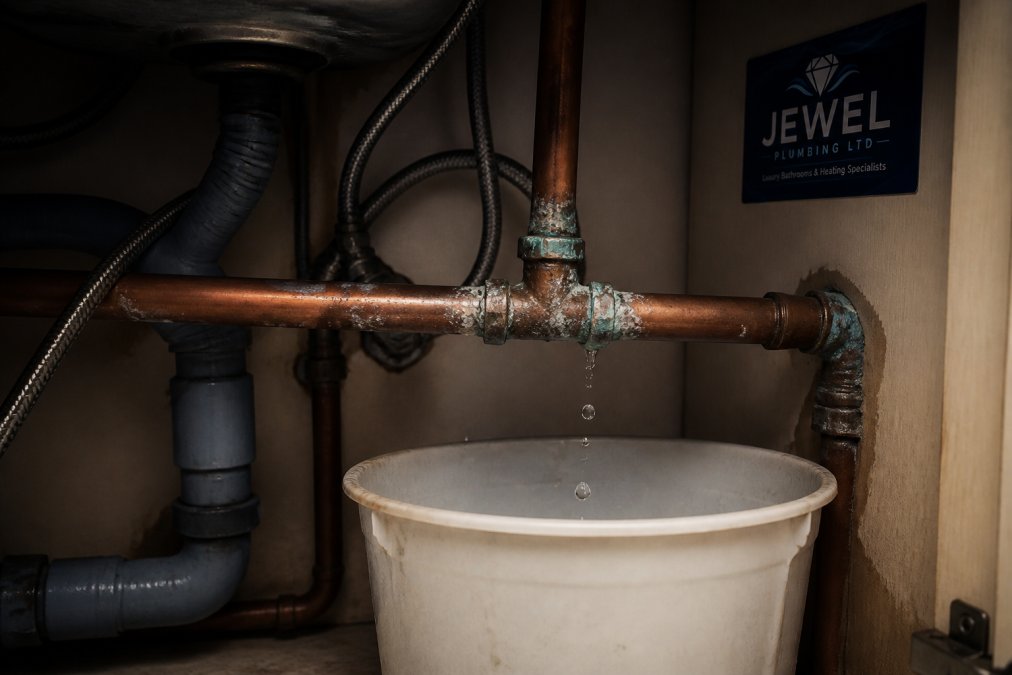
1. Persistent Leaks and Damp Patches
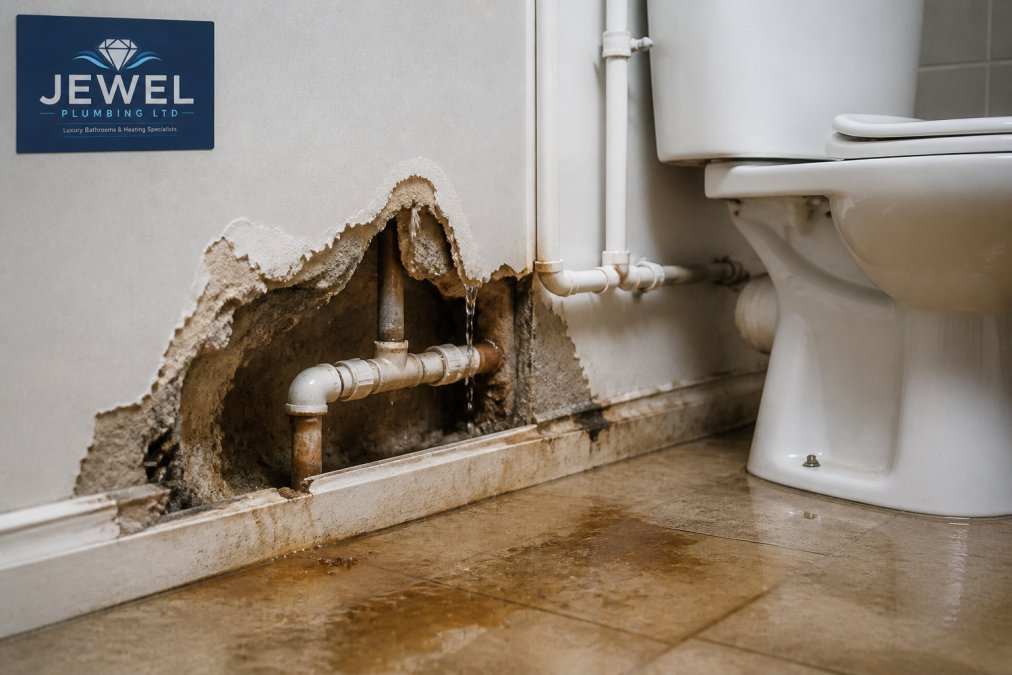
Leaks that keep coming back after a repair are the clearest sign the original work was wrong. A competent installation uses correctly sized pipework, properly applied jointing, and adequate support. When a joint weeps, it usually means the fitting was over-tightened, under-tightened, or assembled without the right sealant. Damp patches on walls or ceilings, musty smells in cupboards, and paint that bubbles near pipe runs all point the same way. Water travels along joists, so the visible patch is often metres from the actual fault.
2. Poor Water Pressure or Drainage
Weak flow at one tap is a nuisance. Weak flow at several outlets at once suggests a design fault. Common causes include undersized pipe runs, excessive bends, or a supply pipe that was never matched to the property's demand. On the drainage side, water that empties slowly or backs up in a sink usually means the fall on the waste pipe is wrong. A waste pipe needs a consistent gradient to carry water and debris away. Get that wrong and you get standing water, odours, and blockages that return every few weeks.
3. Messy Pipework and Untidy Finishing
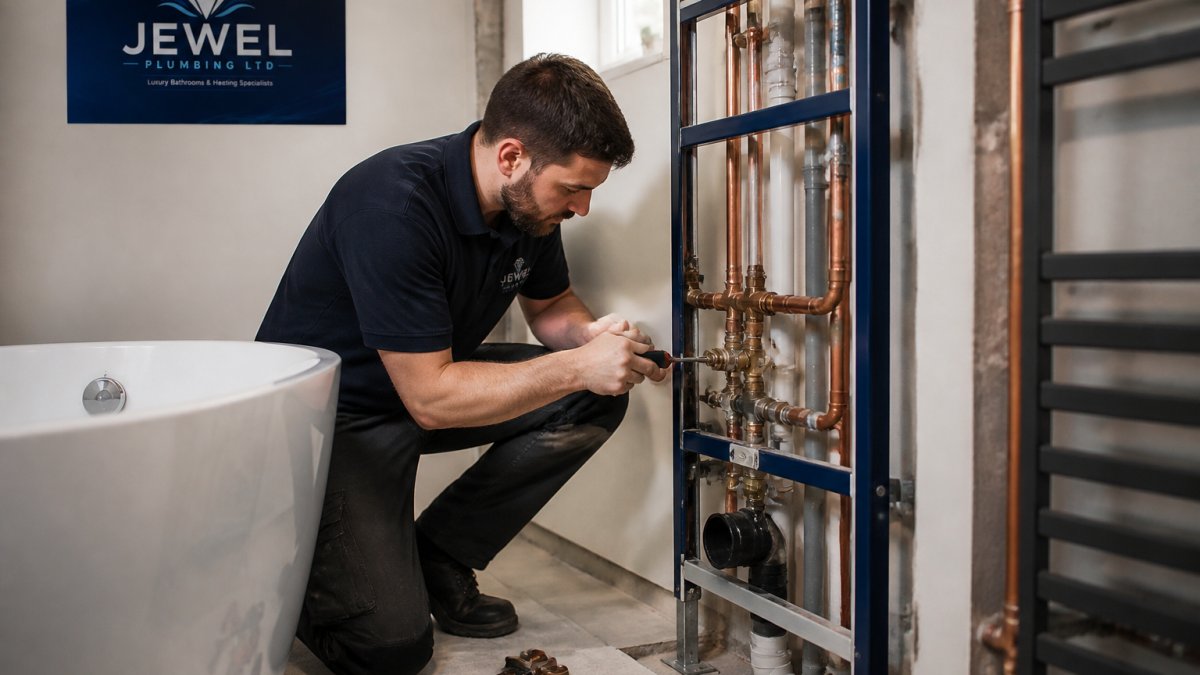
Pipework is the part of a job most homeowners never see, which is exactly why it reveals so much. Look for pipes that run at odd angles, cross each other without clips, or sit unsupported over long spans. Check inside airing cupboards and under floors where you can. A tidy installer clips pipework at regular intervals, keeps runs straight, and isolates valves where they can be reached. Sloppy pipework is rarely an isolated flaw. If the hidden work is careless, the visible work usually is too.
4. Repeated Blockages or Slow Drains
A drain that blocks once is normal. A drain that blocks every few months was installed badly. The usual culprits are inadequate fall, too few access points for rodding, or a waste pipe with a diameter too small for what it has to carry. Kitchen wastes are especially prone to this when an installer has prioritised speed over correct sizing. If you are calling someone out for the same blockage repeatedly, the problem is in the pipework, not in what you are putting down the sink.
5. Noisy Pipes or Boiler Sounds
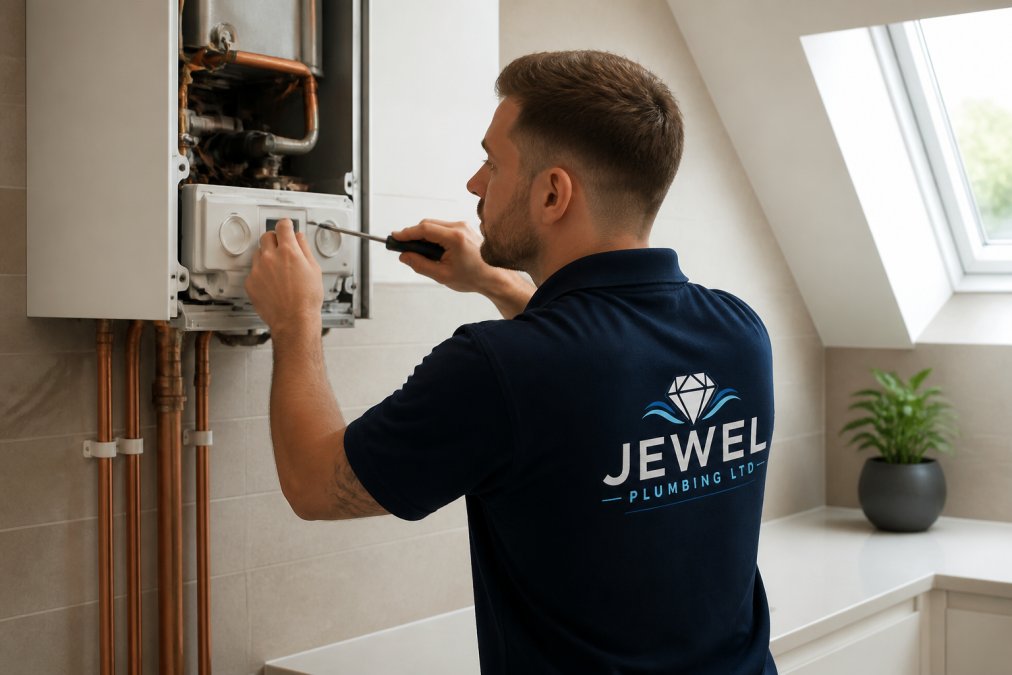
Banging, humming, or whistling pipes point to pressure problems, loose fixings, or air trapped in the system. A boiler that kettles, rumbles, or makes a sound like a small aircraft taking off deserves attention. Some of these noises come from limescale or a failing component, but a surprising number trace back to an installation that was never properly flushed or balanced. Noise is also a warning about wear: vibration loosens joints over time, and loose joints leak.
6. Inconsistent Water Temperature
Water that swings hot and cold in the shower, or a boiler that struggles to hold a steady temperature, often signals a poorly balanced system. It can also mean the boiler was sized wrong for the property in the first place. An undersized boiler will run constantly and still fail to keep up in winter. An oversized one short-cycles, which wears components out early. Correct sizing and balancing are basic parts of a competent installation, and their absence shows up at the tap.
7. Lack of Documentation or Certificates
Missing paperwork is the quietest warning sign and often the most serious. A compliant installation comes with a Building Regulations compliance certificate for notifiable work, plus the manufacturer's benchmark log for a new boiler. If your installer cannot produce these, you have no proof the work meets the Water Supply (Water Fittings) Regulations 1999 or the building regulations. That matters at resale, at insurance renewal, and if anything goes wrong. No certificate usually means no notification was submitted, and that is a problem you inherit.
How to Find a Reliable Plumber
Finding a reliable plumber comes down to checking credentials before you check the quote. Ask for the registration number that lets you verify their competence on the WaterSafe approved contractor scheme, the industry-run finder for qualified plumbing businesses. A genuinely qualified plumber will have it ready. Then ask three questions: who will actually do the work, what the quote includes and excludes, and what happens after completion if something fails. Get the answers in writing. A written scope with a clear exclusions list is your protection against the renovation that spirals once the old bathroom is out.
- Confirm the plumber's registration and public liability insurance
- Request a written quote with a clear scope and exclusions list
- Ask for two recent references you can actually call
- Confirm who will carry out the work and whether subcontractors are used
- Agree what certification you will receive on completion
- Check how defects after completion are handled and for how long
Water Regulations Advisory Scheme Standards Explained
The Water Regulations Advisory Scheme, usually shortened to WRAS, is the body that approves products and materials for use with the public water supply. WRAS approval confirms that a fitting, valve, or pipe material will not contaminate drinking water and meets the requirements of the Water Supply (Water Fittings) Regulations 1999. For homeowners, the practical takeaway is simple. If a plumber fits unapproved materials, the installation can be non-compliant even when it works. You can check whether a specific product carries approval through the WRAS product directory. Ask your installer to confirm the materials they intend to use carry it.
What to Do If Plumbing Work Is Faulty
Faulty work should be raised with the installer in writing first, with photographs and dates. Give them a reasonable opportunity to put it right. If they will not, or if they have disappeared, you have several routes. Report notifiable work that was never certified to your local authority building control team, who can inspect and require correction. For unsafe gas work, contact the Gas Safe Register. For water fittings that breach the regulations, your water supplier can serve a notice requiring remedial work. Keep every quote, message, and photo. If the installer belongs to a trade body or an approved contractor scheme, that body often runs a dispute process.
Conclusion
Spotting the signs of poor quality plumbing work early saves money, and spotting them before you hire saves more. The pattern is consistent: the faults that cause the most damage are the ones hidden behind tiles and under floors, and the paperwork is the first thing a poor installer lets slide.
If you are planning a bathroom refurbishment or a boiler installation in Solihull or the surrounding area, Jewel Plumbing handles luxury bathroom refurbishments and boiler installations with the certification and finish to match. Our team is 5-star rated, covers emergency plumbing across the West Midlands, and works to WRAS-compliant standards on every job. Get started with Jewel Plumbing and have the work done properly the first time.
Frequently Asked Questions
What are the most common signs of a botched plumbing job?
Look for persistent leaks, damp patches on walls or ceilings, poor water pressure, slow drains, and noisy pipes. Untidy pipework with excessive joints or missing clips is another giveaway. If you notice any of these after a recent installation or repair, it is worth getting a second opinion from a qualified plumber. Ignoring these signs can lead to more expensive damage later.
How can I tell if my bathroom installation was done incorrectly?
Check for uneven tiles, gaps in sealant, and water pooling around the base of the shower or bath. Poorly fitted waste pipes often cause slow drainage or gurgling sounds. Also look for loose fittings and inadequate ventilation. If the work fails to meet Water Regulations Advisory Scheme standards, it may not be compliant. A professional inspection can confirm whether the installation was done correctly.
What should I look for when hiring a professional plumber?
Verify that the plumber is properly qualified and insured. Ask for recent references from customers in your area and check online reviews. A reliable plumber will provide a clear written quote, including any potential extra costs, and will not pressure you into unnecessary work. Membership of a recognised trade body is a good sign of professionalism.
What are the risks of ignoring poor quality plumbing?
Ignoring poor plumbing can lead to water damage, mould growth, and structural problems. Leaks may worsen and cause ceilings or floors to deteriorate. Faulty boiler work can be dangerous, risking carbon monoxide leaks. In the long run, fixing botched work costs far more than addressing it early. If you suspect poor workmanship, get a qualified plumber to assess it promptly.