 how-to
What to Do During Plumbing Emergencies: 2026 Guide
Table of Contents
- What to Do During Plumbing Emergencies: First Steps
- How to Turn Off the Water Supply
- What to Do If a Pipe Bursts
- What to Do When a Toilet Overflows
- When to Call an Emergency Plumber
- Common Mistakes to Avoid During Plumbing Emergencies
- Frequently Asked Questions
Last Updated: 15 October 2026
What to Do During Plumbing Emergencies: First Steps
Knowing what to do during plumbing emergencies starts with three actions: shut off the water, cut the power if it is safe, and contain the mess. This guide from Jewel Plumbing walks you through each step for the most common household failures, from burst pipes to overflowing toilets.
Water damage moves fast. A split supply pipe can release several litres a minute into floors, ceilings and electrics. The first ten minutes matter more than anything else you do that day.
So here is the short version:
- Stop the water. Find the stopcock and turn it clockwise until it stops.
- Kill the power to any affected area at the consumer unit, if it is safe to reach.
- Drain the pipes by opening the lowest cold tap in the house.
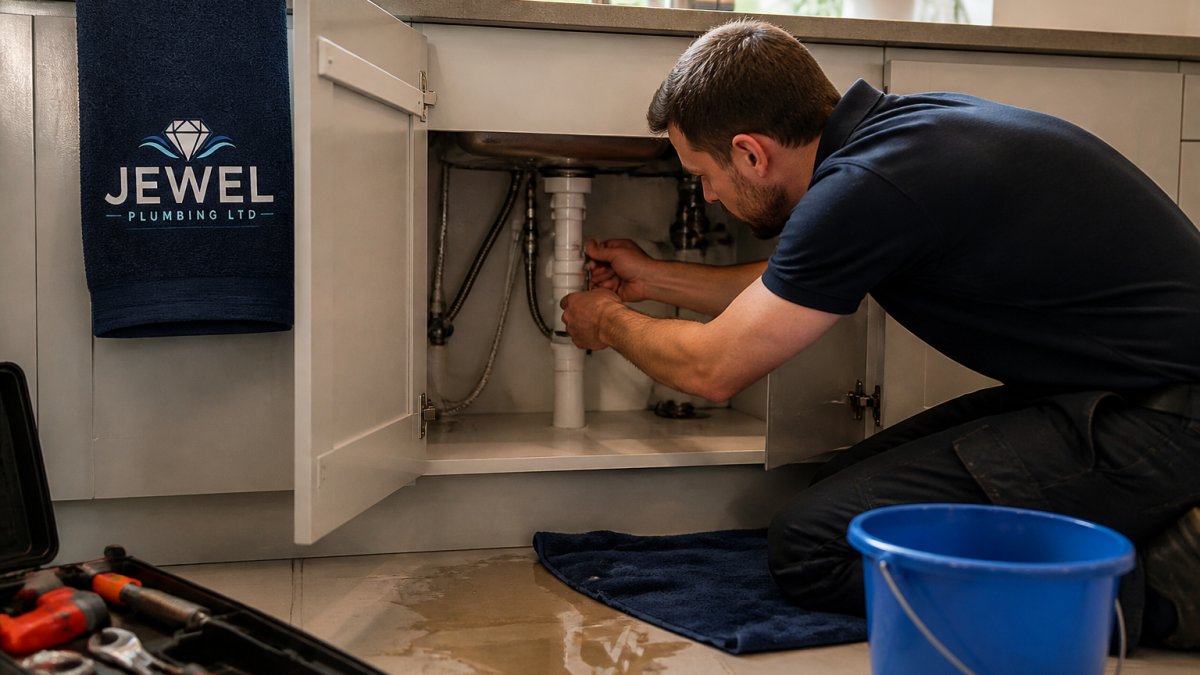
- Contain the leak with towels, buckets and bowls.
- Call a professional if water is near wiring, or if you cannot find the stopcock.
Most people panic and reach for a mop first. Wrong order. Water off, power off, then mop.
How to Turn Off the Water Supply
Turning off the water supply means closing the internal stopcock, usually found under the kitchen sink, in a downstairs cloakroom, or in an airing cupboard. Turn the valve clockwise, firmly, until it will not move any further.
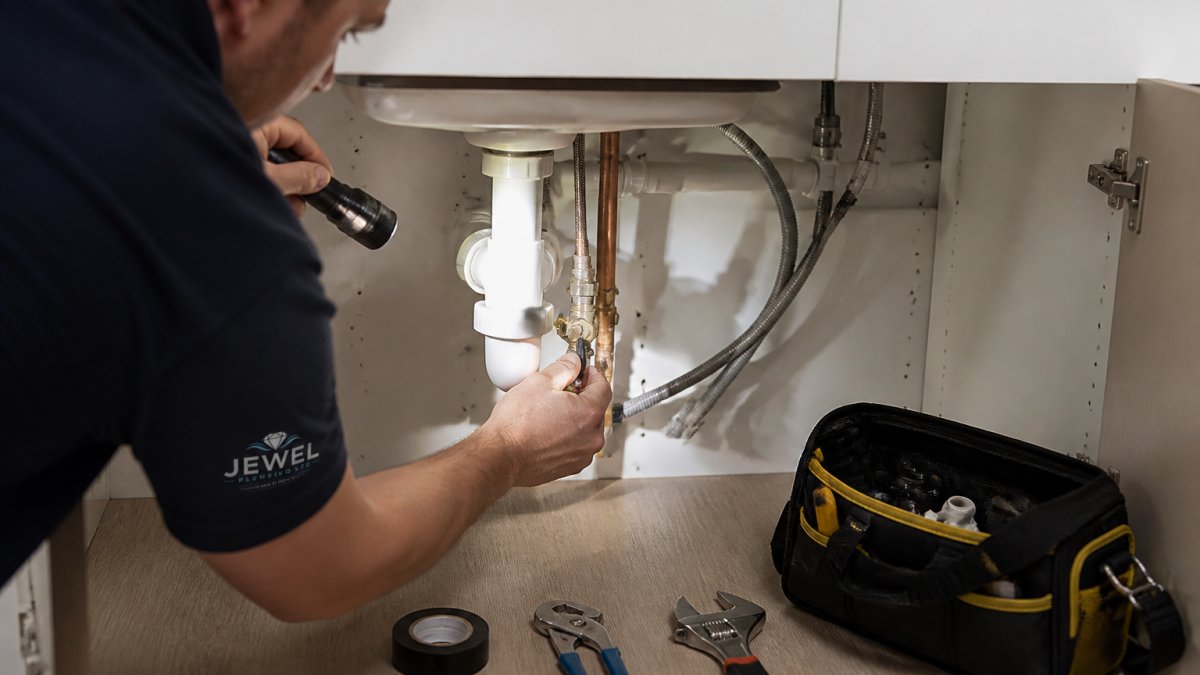
If you cannot find the internal stopcock, look outside for the external stop tap. It often sits under a small metal cover near the boundary of the property, close to the pavement. You may need a stopcock key to reach it.
A few things worth knowing:
- Test your stopcock twice a year. Old valves seize shut.
- Label it clearly so anyone in the house can find it fast.
- Open all cold taps afterwards to drain the system.
- Flush toilets to empty the cisterns.
- If you have a combi boiler, the hot water stops once the supply is off.
Once the water is off, the leak slows to a drip. That gives you time to think.
The Water Regulations Advisory Scheme guidance on stop valves explains how supply fittings should be installed and maintained.
What to Do If a Pipe Bursts
A burst pipe needs the water off immediately, then the pipe isolated or temporarily capped. Do not try to repair a split pipe under pressure. You will get soaked and make the leak worse.
Here is the order that works:
- Close the stopcock.
- Open the lowest taps to drain the system.
- Switch off the boiler and immersion heater.
- Move furniture and electronics away from the water.
- Wrap the split section with self-amalgamating tape as a stopgap.
- Place a bucket underneath and towels around it.
Self-amalgamating tape is a temporary fix only. It buys you hours, not weeks. A proper repair means cutting out the damaged section and fitting a new length of pipe.
Frozen pipes are the most common cause in winter. A pipe that has frozen overnight can split as it thaws. If you suspect a frozen section, thaw it slowly with a hairdryer on a low setting, working from the tap end back towards the tank.
What to Do When a Toilet Overflows
An overflowing toilet usually means a blocked waste pipe or a faulty fill valve. The immediate fix is to stop more water entering the pan, then clear the blockage.
Start by lifting the cistern lid and pushing the float valve up, or turn the isolation valve on the supply pipe clockwise. That stops the cistern refilling. Then:
- Do not flush again. Each flush adds more water.
- Turn off the water supply to the cistern if there is a valve.
- Use a plunger with a good seal around the base of the pan.
- If the water is clean, the blockage is close by.
- If the water is dirty, the blockage is further down the waste pipe.
A blocked soil pipe is not a job for a plunger alone. If two or three attempts do not clear it, stop. Repeated plunging on a full pan can push waste water past the seal at the base and onto the floor.
For persistent blockages, a drain specialist with a CCTV survey can find the cause. Tree roots, collapsed pipework and fat build-up all need proper equipment.
When to Call an Emergency Plumber
Call an emergency plumber when water is near electrics, when you cannot find the stopcock, when the leak is from a pipe you cannot reach, or when the property is at risk of serious damage. Those situations need someone on site, not a YouTube tutorial.
Jewel Plumbing provides emergency plumbing services across the West Midlands, including Knowle, Solihull, Dorridge and Dickens Heath.
Signs you should pick up the phone rather than the mop:
- Water is dripping through a ceiling or light fitting.
- Sewage is backing up into the property.
- The stopcock is seized or broken.
- The boiler is leaking and losing pressure.
- You smell gas alongside the water problem.
If you smell gas, leave the property and call the National Gas Emergency Service on 0800 111 999. That number is free and staffed around the clock.
Common Mistakes to Avoid During Plumbing Emergencies
The biggest mistake during plumbing emergencies is ignoring the electrics. Water and live wiring do not mix, and the risk is real.
Other errors we see often:
- Flushing an overflowing toilet again. It adds water and makes the mess worse.
- Using a plunger on chemical drain cleaner. The two can react and splash back.
- Tightening a leaking joint under pressure. You can crack the fitting.
- Leaving the boiler running with no water supply. It can overheat and lock out.
- Assuming the leak is fixed because it stopped dripping. The pipe is still damaged.
- Not photographing the damage. Insurers want evidence before the clean-up.
Take photos before you start clearing up. Then call your insurer and your plumber.
One more thing. A stopcock that has not been turned in years often seizes solid. If yours will not budge, do not force it with a wrench. You can snap the spindle and turn a small leak into a flood. Get a plumber to free it or replace it.
Frequently Asked Questions
What should I do first in a plumbing emergency?
Turn off the water supply immediately. Find your internal stopcock, usually under the kitchen sink or in a downstairs cupboard, and turn it clockwise until it stops. Then open all cold taps to drain remaining water from the pipes. If water is near electrical fittings, switch off the electricity at the consumer unit before touching anything. Once the flow stops, assess the damage and decide whether you can contain it or need professional help.
How do I turn off the water supply to my house?
Locate your internal stopcock, typically under the kitchen sink or in a utility room. Turn it clockwise firmly by hand or with a stopcock key. If it will not budge, look for an external stop valve outside your property boundary, often under a small metal cover near the pavement. You may need a stopcock key for external valves. Test the taps to confirm the water has stopped before starting any repairs. Knowing this location in advance saves valuable minutes during plumbing emergencies.
Is a leaking pipe considered a plumbing emergency?
A slow drip from an accessible joint is not usually an emergency and can wait for a standard appointment. However, a leak that is spraying water, soaking through ceilings, or near electrical wiring needs immediate attention. If you cannot stop the water with the isolation valve, call an emergency plumber. Water damage escalates quickly, and what starts as a small leak can compromise plasterboard, flooring, and electrics within hours.
Should I turn off my boiler during a plumbing emergency?
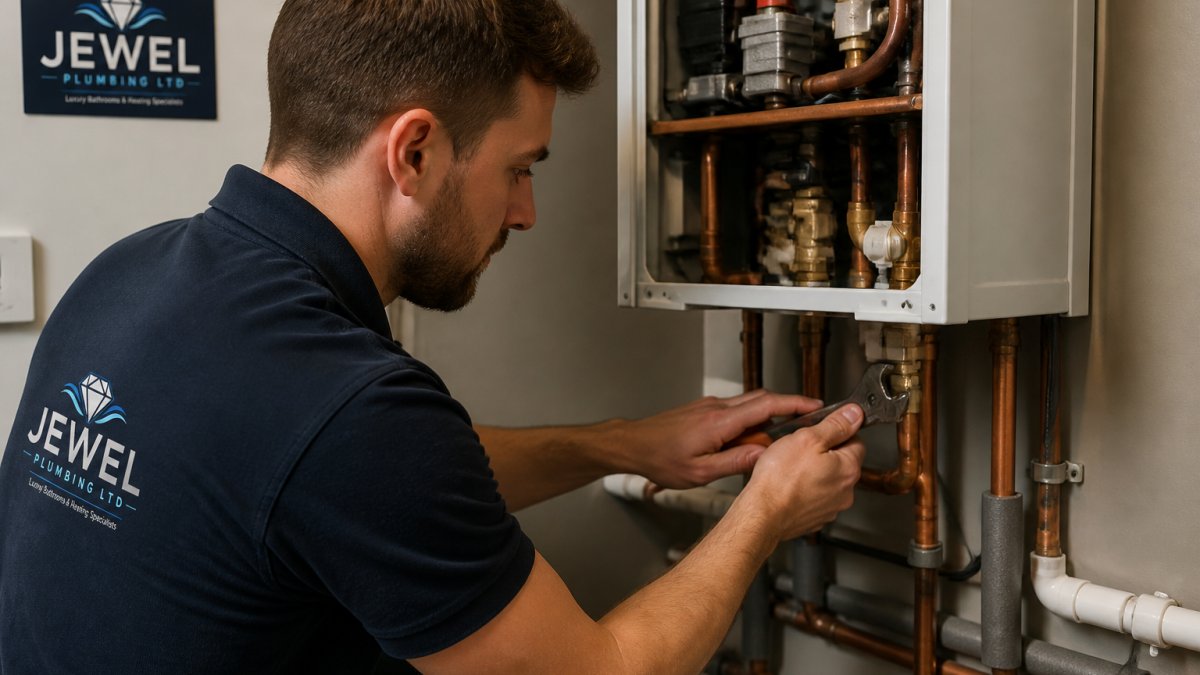
Yes, if the emergency involves water near the boiler or any electrical component. Switch off the boiler at the control panel and isolate its power supply at the fuse spur. If you have a system boiler or regular boiler with a hot water cylinder, also turn off the immersion heater. Do not attempt to relight or restart the boiler until a qualified engineer has inspected it and confirmed it is safe to use.
A burst pipe at 2am is stressful, but the steps are simple: water off, power off, contain, call. Jewel Plumbing offers 5-star rated emergency plumbing, luxury bathroom refurbishments and reliable boiler installations across the West Midlands. Our team handles everything from a seized stopcock to a full heating failure, with clear quotes and no hidden costs. Get started with Jewel Plumbing and get your home back to normal.