 how-to
Why Are My Radiators Cold at Bottom? Fixes That Work
Table of Contents
- Why Are My Radiators Cold at Bottom? The Core Causes
- How to Tell If Sludge Is the Problem
- Radiator Bleeding Guide: What It Fixes and What It Doesn't
- How to Power Flush a Radiator: Step-by-Step
- When to Call a Heating Engineer
- Gas Safety Cert: Why It Matters for Your Heating System
- Preventing Cold Radiators in the Future
- Frequently Asked Questions
Last Updated: October 4, 2026
Why Are My Radiators Cold at Bottom? The Core Causes
If your radiators are cold at the bottom but warm at the top, you are not imagining it, and you are not alone. This guide from Jewel Plumbing explains exactly why radiators cold at the base is one of the most common heating complaints we hear from homeowners, and what you can do about it.
A radiator that heats unevenly almost always points to one of two problems: sludge blocking the flow, or trapped air preventing hot water from circulating properly. The good news is that both are fixable, and you can often tell which one you have within minutes.
Below, we will walk you through the causes, the fixes, and when it is time to call in a heating engineer. We will also cover how to power flush a radiator yourself and why a gas safety cert matters for your system's long-term health.
Sludge and Magnetite Build-Up
Sludge is a thick, dark mixture of rust, dirt, and magnetite that settles at the bottom of your radiators over time. Cold radiators at the bottom are the classic sign.
Here is what happens:
- Water inside your system reacts with steel, creating magnetite particles
- These particles sink and collect at the lowest point
- The build-up blocks hot water from reaching the bottom of the radiator
- Your radiator stays cold where the sludge sits
Older systems with open vents are more prone to this. If you have never had your system cleaned, sludge is the likely culprit.
Trapped Air and Poor Water Flow
Trapped air creates the opposite pattern: cold at the top, warm at the bottom. But air can also cause uneven heating that feels like cold spots at the base.
Air gets into your system through:
- Small leaks in pipework or valves
- A faulty pump pulling in air
- Recent work on the system that introduced air pockets
When air blocks the flow, hot water cannot circulate. The result is a radiator that never heats properly. Bleeding often fixes this.
How to Tell If Sludge Is the Problem
The sludge test is simple and takes under a minute. Here is how to do it.
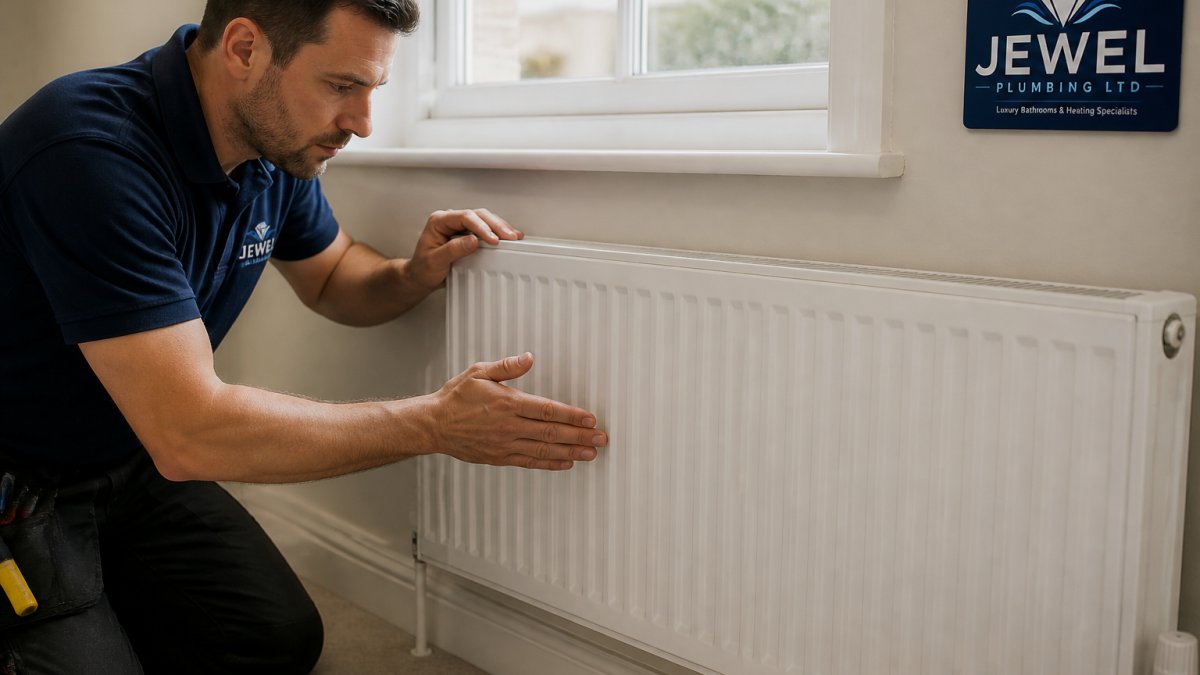
Wait until your heating has been running for at least 20 minutes. Then carefully touch the radiator in three places: top, middle, and bottom.
- Top hot, bottom cold: sludge
- Top cold, bottom hot: trapped air
- Cold everywhere: valve closed, pump issue, or no hot water reaching the radiator
- Hot everywhere but weak: partial blockage or balancing problem
You can also check the water colour. Bleed a small amount into a white container. Black or brown water confirms sludge. Clear water means the problem is likely air or flow.
A common mistake is assuming every cold radiator needs bleeding. In practice, bleeding only helps when air is the cause. If sludge is the issue, bleeding will not fix it.
Radiator Bleeding Guide: What It Fixes and What It Doesn't
Bleeding releases trapped air from your radiator. It is the right fix for cold tops and noisy systems. It will not fix cold bottoms caused by sludge.
Here is our radiator bleeding guide:
- Turn off your heating and let the system cool
- Find the bleed valve at the top corner of the radiator
- Place a cloth and small container underneath
- Use a radiator key to turn the valve anticlockwise
- Listen for a hiss as air escapes
- Close the valve as soon as water drips out
- Check your boiler pressure and top up if needed
If the radiator is cold at the bottom, bleeding will not help. That is a sludge problem, and it needs flushing.
How to Power Flush a Radiator: Step-by-Step
A power flush removes sludge and restores full heat across the radiator. You can do a basic flush at home, but a professional power flush uses higher pressure and cleaning chemicals for a deeper result.
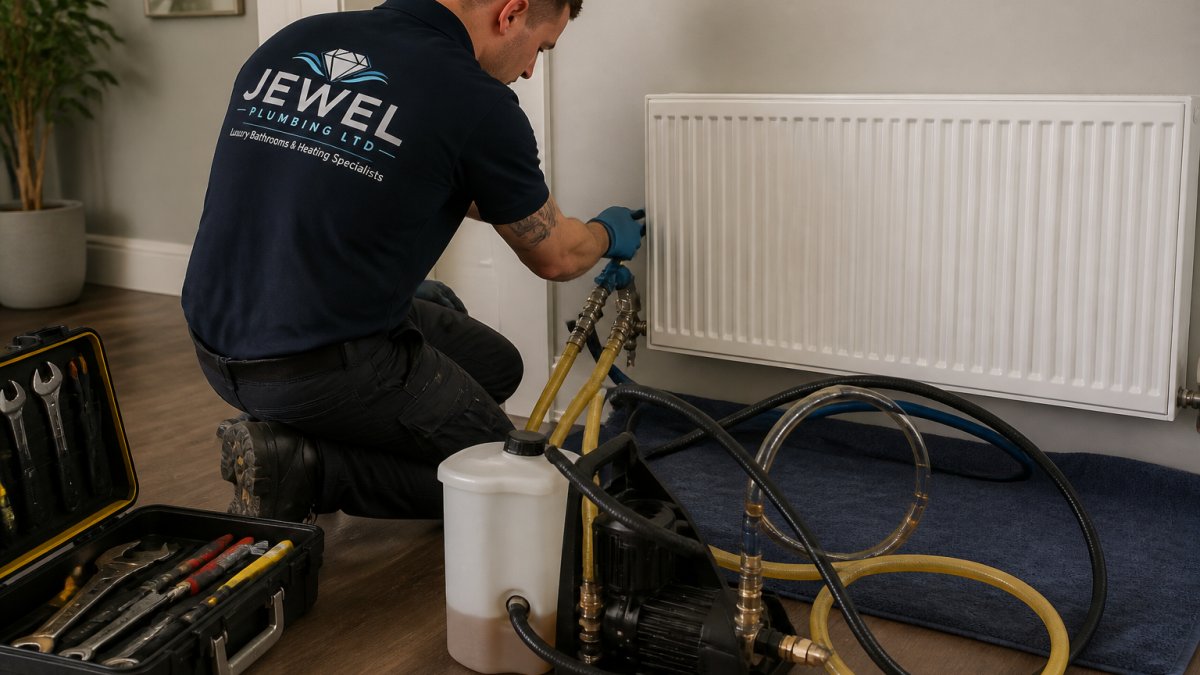
Tools and Preparation
You will need:
- A radiator flushing kit or hosepipe adapter
- A bucket and old towels
- A radiator key and spanner
- A garden hose or access to an outside tap
- Protective gloves
Turn off the heating and close both radiator valves. Place towels under the valves to catch drips.
Flushing the Radiator
- Close the valves at both ends of the radiator
- Remove the radiator from the wall brackets
- Take it outside and connect a hose to the inlet
- Run water through until it flows clear
- Flush from both directions to dislodge stubborn sludge
- Refit the radiator and reopen the valves
- Bleed the radiator to remove air
For a full system clean, a professional power flush is worth the investment. According to Energy Saving Trust guidance on heating systems, a clean system heats more evenly and can reduce energy waste.
When to Call a Heating Engineer
Some jobs are best left to a professional. Call a heating engineer if:
- Multiple radiators are cold at the bottom
- Bleeding does not fix the problem
- The water is black when you bleed the radiator
- Your boiler keeps losing pressure
- You hear banging or gurgling noises
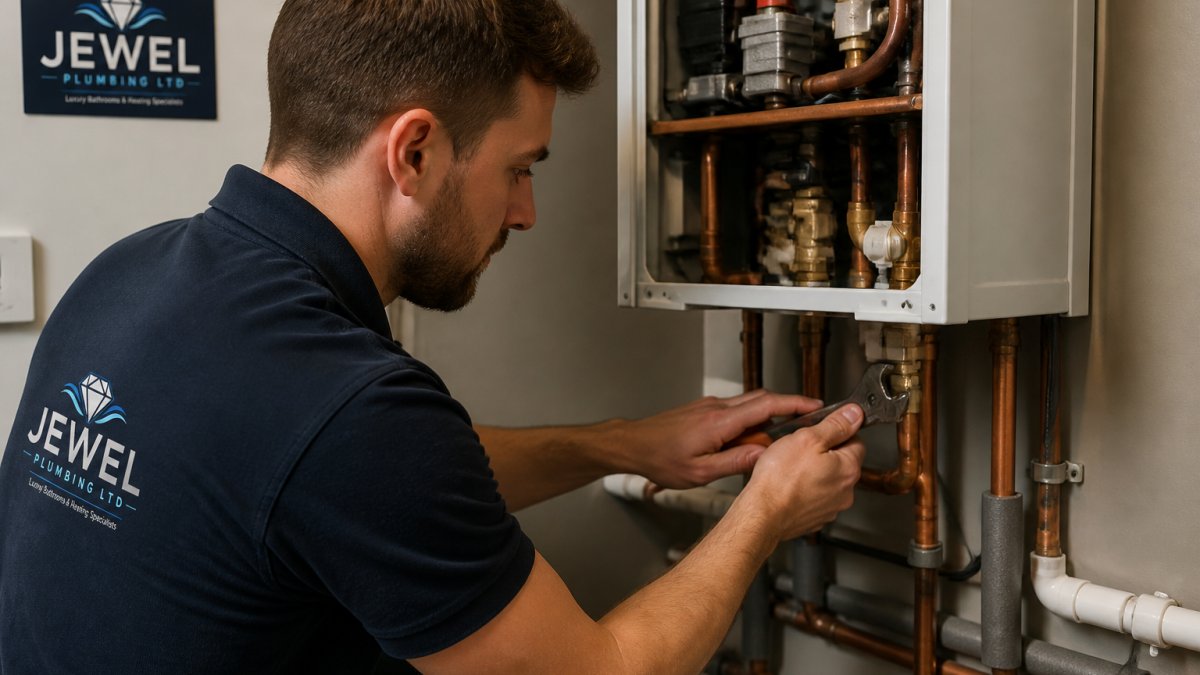
A heating engineer can carry out a full power flush, check your pump, and balance the system.
Do not ignore repeated cold spots. Sludge that stays in the system can damage your boiler and lead to costly repairs.
Gas Safety Cert: Why It Matters for Your Heating System
A gas safety cert is a document confirming that your gas appliances are safe to use. Landlords must have one by law for every rented property.
For homeowners, a gas safety cert is not a legal requirement, but it is a smart move. It catches problems early, including issues that affect how well your heating works.
Here is why it matters:
- It confirms your boiler and gas appliances are burning safely
- It checks for leaks and carbon monoxide risks
- It gives you a record of your system's condition
- It can flag early signs of sludge or pressure problems
Book a gas safety check alongside your annual boiler service. For guidance on gas safety in the home, see Gas Safe Register official advice.
Preventing Cold Radiators in the Future
Prevention is cheaper than repair. Here is how to keep your radiators heating evenly.
| Problem | Fix | Frequency |
|---|---|---|
| Trapped air | Bleed radiators | Twice a year |
| Sludge build-up | Power flush | Every 5-6 years |
| Poor water flow | Balance the system | After any changes |
| Low pressure | Top up boiler | As needed |
| General wear | Annual boiler service | Once a year |
Add a magnetic filter to your system. It captures magnetite before it settles in your radiators. Most heating engineers recommend one for older systems.
Also keep your boiler pressure in the correct range. Check it monthly and top up when it drops. For more on maintaining your heating system, see Which? guide to boiler servicing.
Frequently Asked Questions
Does a cold radiator at the bottom mean I need a power flush?
Not always. A cold bottom often points to sludge, but it can also be trapped air or a balancing issue. Try bleeding the radiator first. If the bottom stays cold while the top heats up, sludge is likely. A power flush using the method in our guide can clear it. For a proper diagnosis, a heating engineer can assess your system and recommend the right fix.
Can I fix a radiator that is cold at the bottom myself?
You can try bleeding the radiator and checking the valve settings. If the problem is sludge, a DIY power flush with a hired machine is possible but messy and carries risks. Many homeowners prefer to call a professional. If you are unsure, a heating engineer can confirm whether a power flush or a simpler fix is needed.
Is it dangerous to have a radiator that is cold at the bottom?
It is not immediately dangerous, but it signals sludge or air that can strain your boiler and raise energy bills. Over time, sludge can block pipes and cause boiler breakdowns. If you have a gas boiler, ensure it is serviced annually and you have a valid gas safety cert. A qualified engineer can check for safety issues.
Will bleeding a radiator fix it if it is cold at the bottom?
Bleeding removes trapped air, which usually causes cold spots at the top, not the bottom. If your radiator is cold at the bottom, bleeding alone is unlikely to solve it. Sludge settles at the bottom, so you may need a power flush. Try bleeding first, but if the bottom remains cold, call a heating engineer to assess for sludge.
Cold radiators at the bottom rarely fix themselves, and ignoring the problem only lets sludge spread through your system. At Jewel Plumbing, our heating specialists carry out power flushes, radiator balancing, and full system cleans across the West Midlands. We also handle boiler installations, emergency plumbing, and luxury bathroom refurbishments, backed by our 5-star rated service. Get started with Jewel Plumbing and restore even heat to every room in your home.